

Ford Transit CV Gaiter Replacement in Walsall After Knocking on Turns
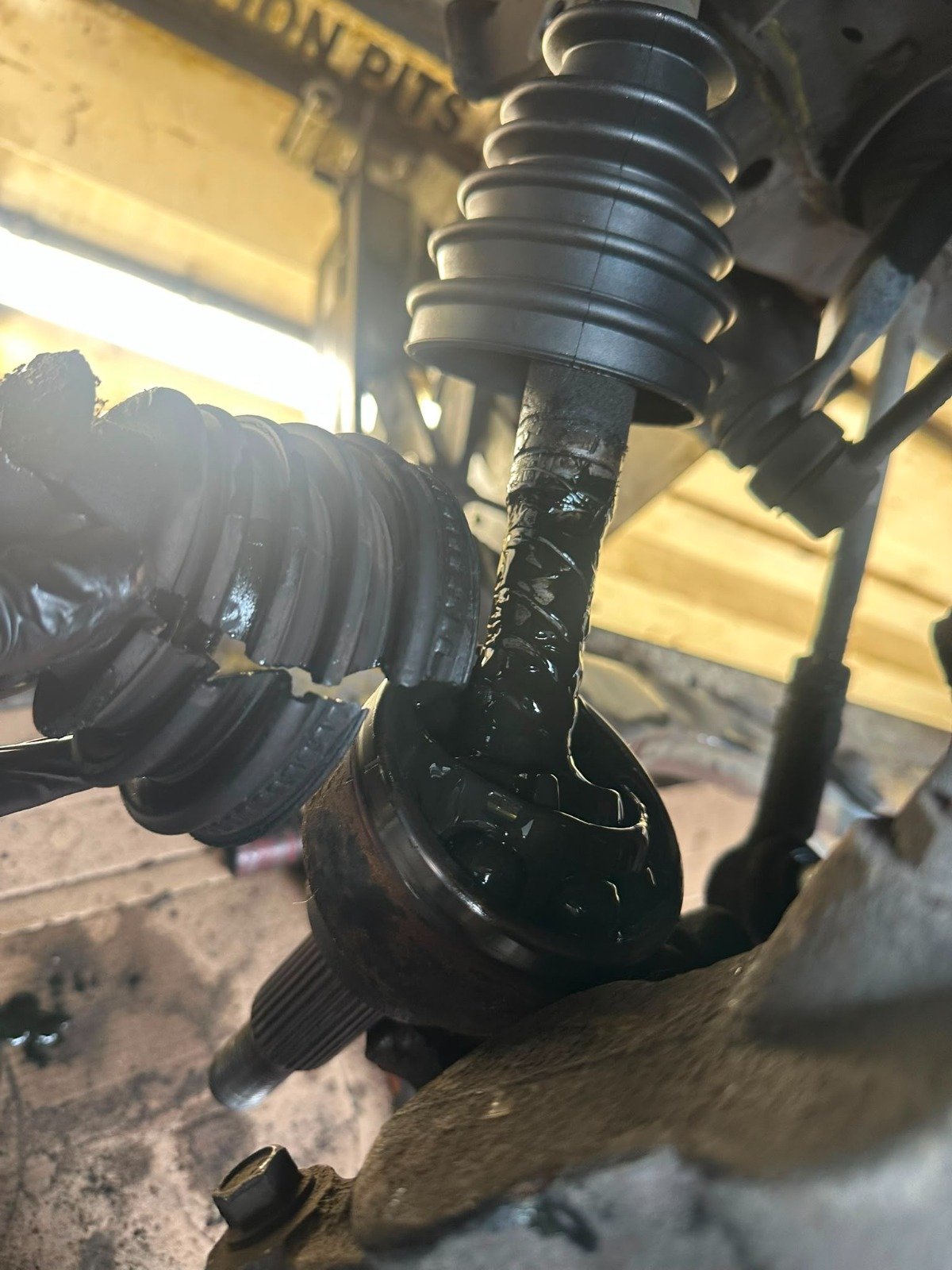
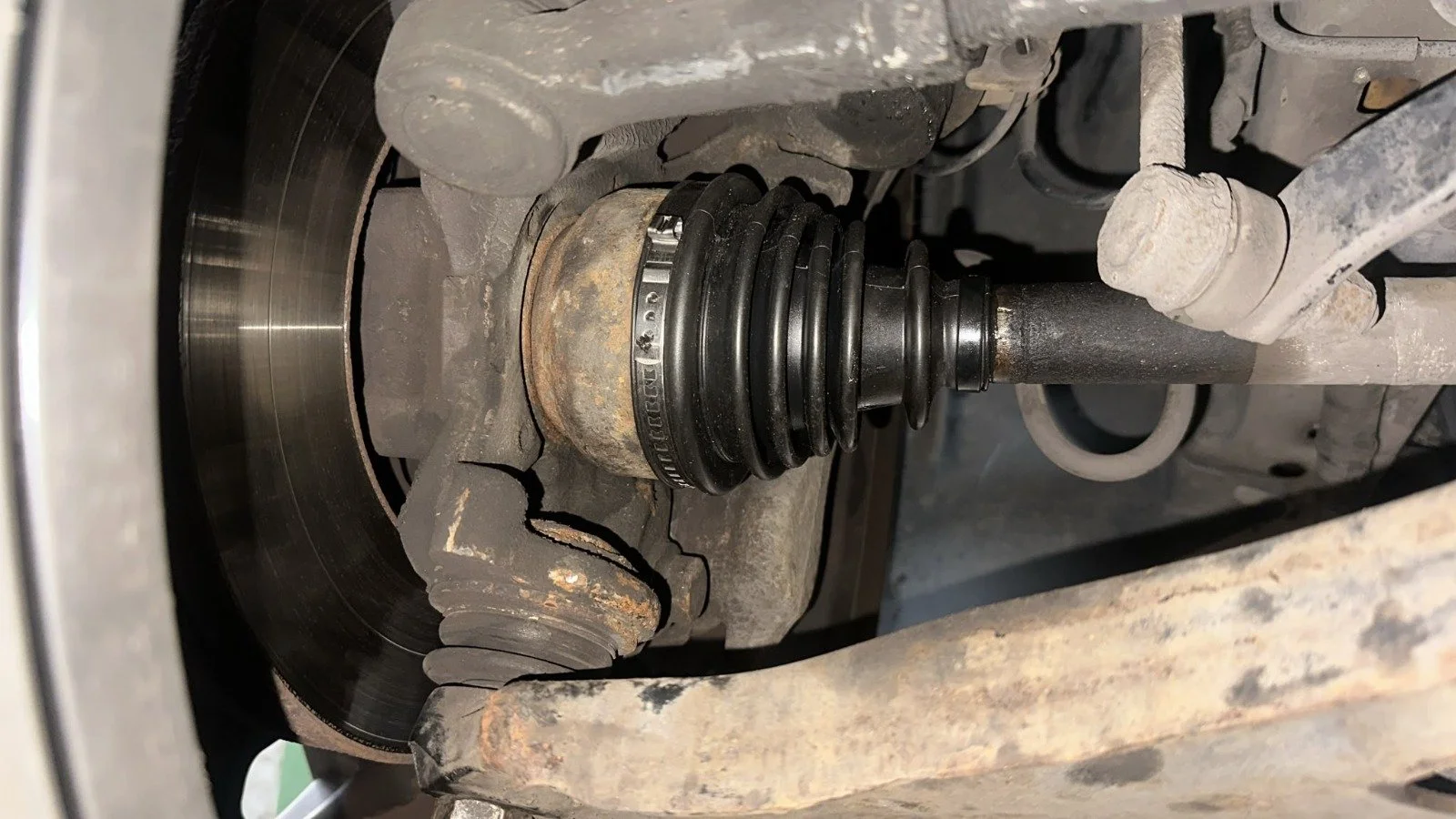
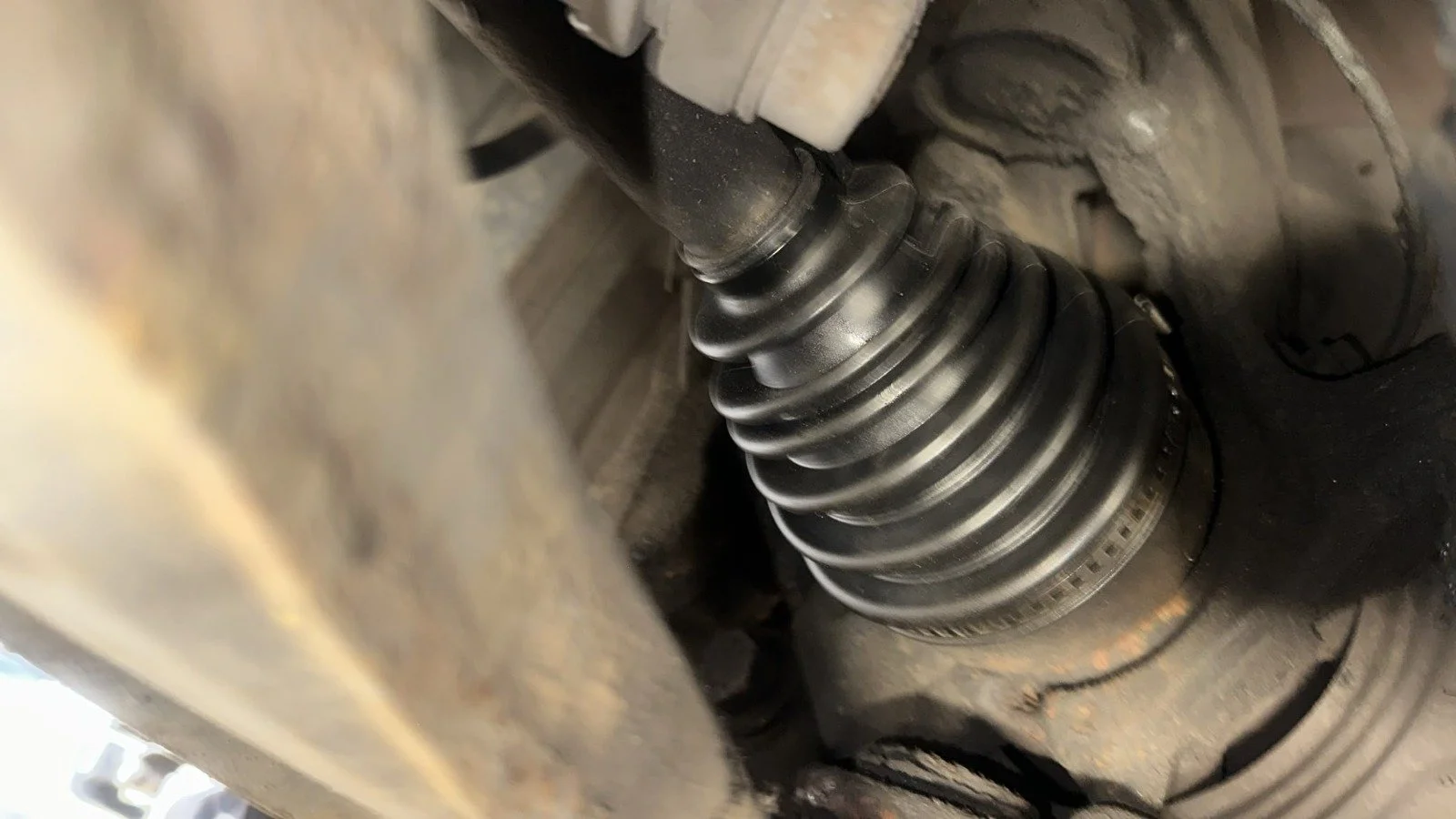
A 2021 Ford Transit came into us recently with a knocking noise the driver had been noticing every time he turned the wheel. It was not constant, it only appeared on turns, and that pattern alone told us a fair amount before we had even lifted the van. We got it on the ramp, removed the wheels and went straight to the driveshaft to find out what was going on.
A Split CV Gaiter Had Left the Driveshaft Joint Running Without Grease
When we inspected the driveshaft we found the CV gaiters had split on both sides. A CV gaiter is the rubber boot that wraps around the CV joint, which is the part of the driveshaft that allows the wheel to turn left and right while still receiving drive from the engine. The gaiter has one job, to keep a precise amount of grease packed inside the joint and to keep road dirt, grit and water out. Once it tears, the grease escapes and contamination gets in. On this van the gaiters had ripped and grease had been thrown out across the surrounding components. The joints themselves had been running dry for some time and the internal bearing surfaces were showing wear as a result. That wear is what was producing the knocking noise on turns.
Leaving a Torn CV Gaiter Turns a Low Cost Repair Into a Driveshaft Replacement
This is a fault that gets significantly more expensive the longer it is left. A CV gaiter replacement is a straightforward repair at a fraction of the cost of a full driveshaft. But once the joint runs dry and the metal surfaces inside begin to wear against each other, the joint itself deteriorates to the point where it cannot be saved. At that stage you are not paying for gaiters, you are paying for a complete driveshaft replacement, which on a Transit is a considerably larger job. There is also a safety element here. A CV joint that has worn past a certain point can fail under load, and if that happens while the van is moving it can affect the driver's ability to control the vehicle. For a van that may be carrying tools, stock or passengers, that is not a risk worth taking.
We Replaced the CV Gaiters and Road Tested the Transit Before It Left
We replaced the CV gaiters on the driveshaft, regreased the joints with the correct quantity of CV grease and torqued everything back to the manufacturer's specification. Once reassembled we road tested the van through a range of steering inputs, including tight low speed turns where the noise had been most noticeable, to confirm the knock had gone. The van went back to the owner the same day and the repair saved him from a driveshaft replacement that would have cost considerably more.
If Your Van Is Knocking on Turns, Book It In With Us in Walsall Before the Cost Grows
CV gaiter faults are one of those repairs where catching it early makes a real difference to what you pay. The sign to watch for is a knocking or clicking noise that appears when you turn the wheel, particularly at low speed on full or near full lock, such as when pulling out of a junction or manoeuvring in a yard. If the noise is there on one side, it tends to be worse turning in one direction than the other. If you are hearing anything like that on your car or van, do not leave it to get worse.
At Platinum Vehicle Services in Walsall we work on a wide range of vehicles including Ford, Mercedes, BMW, Audi and Volkswagen, covering everything from routine servicing and MOTs through to suspension, brakes, engine work and driveshaft repairs. You can leave us a message 24 hours a day, 7 days a week on 07970901354 and someone from the team will get back to you as soon as possible. You can also find out more and book in at platinumvehicleservices.co.uk.
General Service and Inspection Carried Out in Walsall
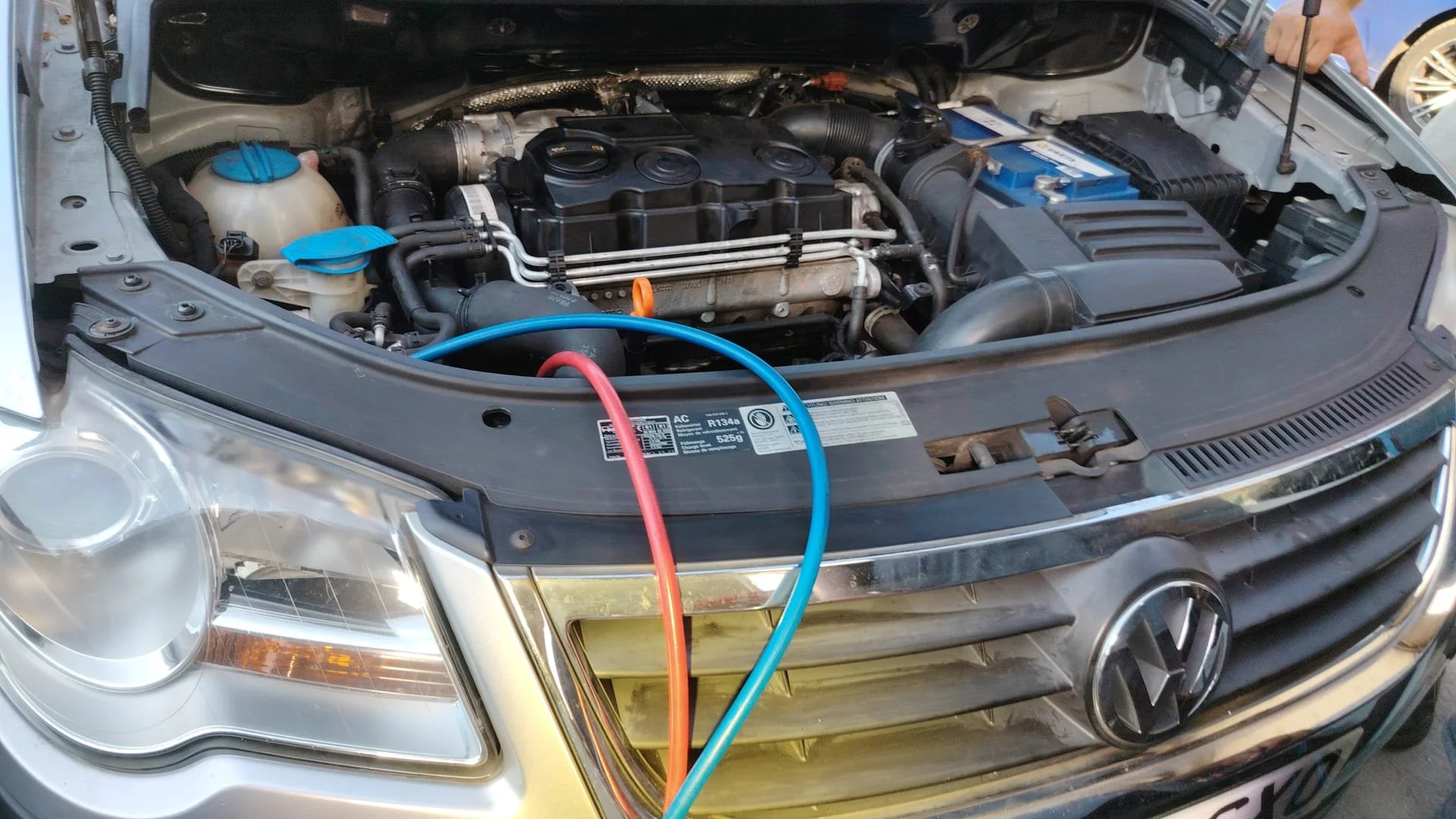
Bringing your vehicle in for a regular service is one of the best things you can do to keep it running safely and reliably. At our Walsall garage we carry out thorough inspections alongside every service, making sure nothing gets missed and giving you a clear picture of your vehicle's condition before any issues have a chance to develop into something more serious.
Our technicians work through a detailed checklist covering all the key systems on the vehicle. This includes the engine oil and filter, air filter, fuel filter where applicable, spark plugs, coolant levels, brake fluid, and a full visual check of the braking system front and rear. We also inspect tyres for wear and pressure, check all lights are functioning correctly, and look over the suspension components for any signs of wear or damage.
Why Regular Servicing Matters
A lot of drivers only book their car in when a warning light appears or something feels noticeably wrong. By that point a small problem has often had time to affect other components, and what might have been a straightforward fix becomes a more involved and expensive repair. Routine servicing keeps everything in check and gives you peace of mind that the vehicle is safe for you, your passengers, and other road users.
Engine oil in particular breaks down over time and loses its ability to lubricate effectively. Running an engine on old or low oil increases wear significantly, and in the worst cases can lead to serious engine damage. Changing the oil and filter on schedule is one of the simplest and most cost-effective things you can do for the long-term health of your vehicle.
Honest Advice From Local Technicians
We always talk you through anything we find during a service. If something needs attention we will explain what it is, why it matters, and give you a clear quote before any additional work is carried out. There is no pressure and no surprises on your invoice. We want you to feel confident in the work we do and comfortable coming back next time.
Our garage is conveniently located for customers across Walsall and the surrounding areas, and we work on all makes and models. Whether you drive a small city car, a family estate, or a larger SUV, our team has the experience and equipment to service it properly.
If your vehicle is due a service or you would like us to take a look at a specific concern, get in touch with the team today. We are happy to answer any questions and book you in at a time that suits you.
Audi A1 Mini Service Uncovers Worn Brake Pads and Discs in Walsall
This Audi A1 came into us at Platinum Vehicle Services booked in for a routine mini service. Nothing dramatic on the surface. The owner had noticed no major warning signs, which is actually quite common with brake wear. You do not always feel or hear the problem until it has gone well beyond the point where it should have been caught. We removed the front wheels as part of our standard service checks, and what we found under there needed addressing before that car went back on the road.
The Front Brake Pads Had Worn Down to the Metal and the Discs Had a Visible Wear Lip Along the Outer Edge
When we pulled the front wheel off, the state of the braking system was clear. The brake pads had reached the absolute end of their usable life. There was no friction material left to speak of. At that stage the metal backing plate of the pad is making contact with the disc, which is not something you want happening at any speed. A healthy brake pad has somewhere between 10mm and 12mm of friction material when new. By the time you are at 3mm you are in the advisory zone. These pads were past that point entirely. On top of that, the brake discs themselves had developed a pronounced lip along the outer edge. That lip forms when the centre of the disc wears down through regular use but the very outer edge, which sits beyond the reach of the pad, stays at its original height. When that lip becomes visible and measurable, it tells you the disc has lost enough material across its face that it can no longer do its job properly. A disc that is worn like this has less thermal mass, meaning it absorbs and disperses heat less effectively during braking. It also has an uneven surface that prevents the pad from biting evenly and cleanly.
Leaving the Brakes in This Condition Would Have Increased Stopping Distances and Put Real Pressure on the Rest of the System
I want to be direct about what the risk is here rather than just saying it was urgent. When pads are worn to the metal and pressing against a worn disc, your braking efficiency drops significantly. Stopping distances increase, and they increase more sharply the harder you have to brake. At 30mph in normal conditions a well-maintained car should stop in around nine metres. Once the system is compromised like this, that figure goes up and you lose the predictability you rely on. There is also the question of cost. Once metal is running against metal on a worn disc, the disc surface scores and gouges quickly. In some cases that process takes only a few hundred miles. What might have been a pad and disc replacement becomes a more involved job if other components are dragged into the damage. Leaving it longer was not an option.
New Brake Pads and Discs Were Fitted to Both Front Corners and the Full Mini Service Was Completed
We replaced both front brake discs and both sets of front brake pads. When we do this job we always replace both sides together. Fitting new components to one side and leaving worn ones on the other creates an imbalance. When you press the brake pedal, the car pulls toward whichever side has more grip, and that is not something you want to find out about for the first time in a hurry. The new discs were bedded in correctly and the pads seated properly before the car left us. The rest of the mini service was also completed, covering the oil, filter, and all the checks that come with that job. The car left us in a condition we were confident about.
If Your Brakes Feel Soft, Pull to One Side, or You Can Hear Grinding When You Stop, Book in Before It Gets Worse
Brake wear is something a lot of drivers do not notice until it has gone too far. The signs to listen and feel for are a grinding or scraping noise when you brake, a pulling sensation where the car drifts left or right as you slow down, a spongy feeling through the brake pedal, or a longer distance than usual before the car comes to a stop. If any of those sound familiar, do not leave it. At Platinum Vehicle Services in Walsall we carry out brake inspections as part of our servicing work and we will always tell you exactly what we find, including the measurements, so you understand what you are dealing with. You can book your vehicle in with us at platinumvehicleservices.co.uk.
BMW 5 Series Brake Service in Walsall, Worn Discs, Tired Calipers, and a Full Brake Overhaul
This BMW 5 Series came into us at Platinum Vehicle Services needing a brake service. The customer had noticed the car was not pulling up as cleanly as it should and had a slight judder through the brake pedal under firmer stops. That kind of feedback through the pedal is always worth taking seriously on a car this size. A 5 Series is a heavy vehicle and it asks a lot of its braking system, so we got it up on the ramp and took a proper look at what was going on.
The Discs Were Worn Below Minimum Thickness and the Calipers Were Showing Clear Signs of Deterioration
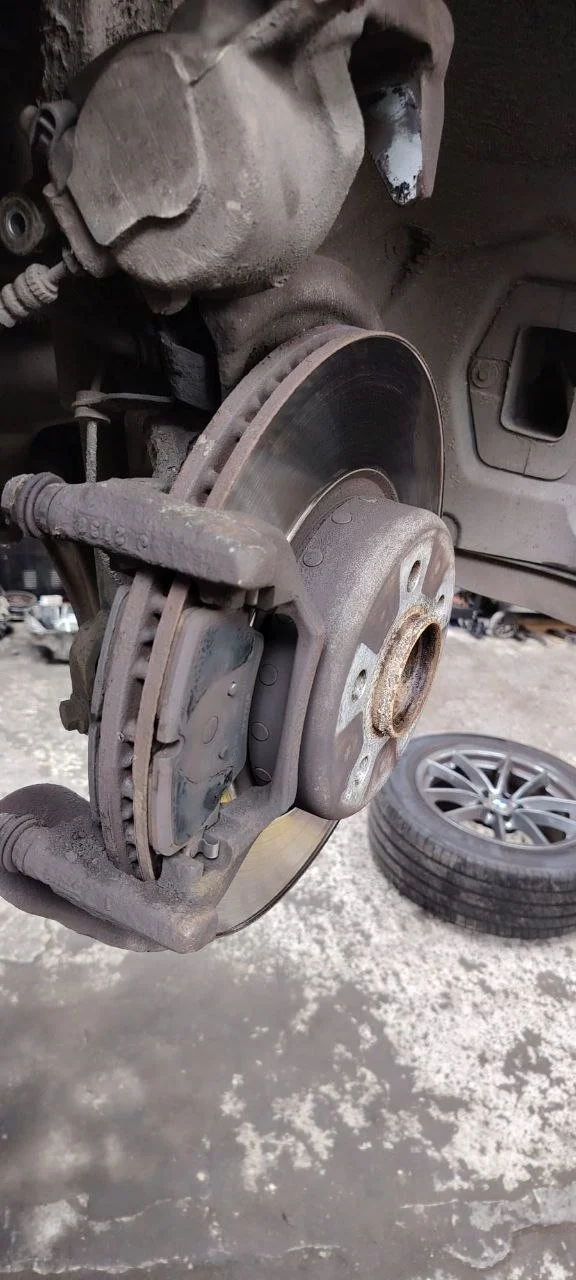
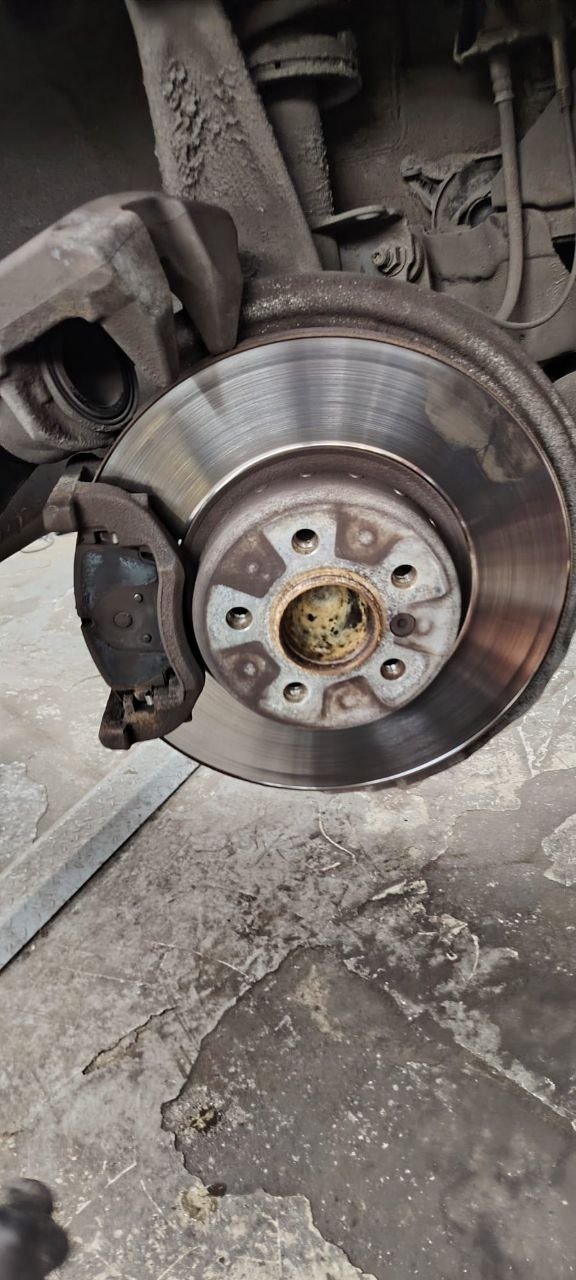
When we pulled the wheels off and inspected the brake assembly, the discs had worn down and were showing a pronounced lip around the outer edge. On a BMW 5 Series the rear discs should typically measure no less than around 10mm in usable thickness once you account for the minimum wear specification. These were past that point, and you could see corrosion cutting into the surface of the disc face itself, not just around the hat section where surface rust is normal, but across the braking track where the pads make contact. That means the friction surface is compromised and the pad cannot bite consistently across the full sweep of the disc. The calipers were also in poor condition. The slider pins had seized, which meant the caliper was not floating correctly. When a caliper cannot slide freely, the pad on one side carries almost all the load. That causes uneven wear, pulls the car to one side under braking, and puts the remaining pad material under far more stress than it is designed to handle.
Leaving This Any Longer Would Have Risked Uneven Braking, Accelerated Wear, and a Much More Expensive Repair
The judder the customer felt was a direct result of the disc surface being inconsistent. As the worn and corroded disc rotates, the pad is effectively hitting a surface that is no longer flat and even. That vibration travels back through the caliper, through the brake line, and into the pedal. Left alone, this does not stay the same. It gets worse, and it gets worse quickly. Seized caliper sliders, if not addressed, can cause the caliper to stick. A sticking caliper means one side of the brakes is working when the other is not, and under an emergency stop that is a serious problem because the car will not stop in a straight line. Beyond the safety concern, a seized caliper will destroy a new disc and pad set in a very short distance if the underlying problem is not fixed first. That would mean spending twice on parts and labour that should only need to be spent once.
New Discs and Calipers Fitted, Pads Replaced, and the Full Brake System Checked Before the Car Left the Workshop
We fitted new brake discs and replaced the calipers with quality replacements suited to the vehicle. New brake pads were fitted at the same time. There is no point fitting new discs and leaving old pads in place, because worn pads will score a new disc surface within the first few hundred miles. Once the new components were on, we bedded the brakes in correctly and checked the pedal feel before returning the car to the customer. The difference was immediate. A firm, progressive pedal with no judder and braking that felt consistent from the start of the stop to the end of it.
Brake work is one of the most common jobs we carry out here in Walsall, and the BMW 5 Series is a car we see regularly. If you are driving a 5 Series or any other BMW and you have noticed a judder through the pedal, a pulling sensation when you brake, a grinding noise, or a soft pedal that requires more pressure than usual, those are the signs worth acting on before a straightforward service turns into a larger job. Any spongy or inconsistent pedal feel is worth having checked. Corrosion on discs that looks like a thin layer of surface rust after the car has sat overnight is normal and clears itself after a few stops, but deep pitting or a visible lip at the edge of the disc means the disc is past its serviceable life. We offer brake inspections and full brake servicing for all makes and models, and we will always tell you what we find and what actually needs doing rather than adding work that is not necessary. If your car is due a brake check, get in touch with us at Platinum Vehicle Services in Walsall and we will take a look. You can book online or find out more at platinumvehicleservices.co.uk.
The Nürburgring's Fastest Production Car: What It Takes to Master the Ring
The Nürburgring Nordschleife is not just any race track. It is the ultimate test of what a car can do when everything comes together perfectly, and more than any other circuit in the world, a reminder of what happens when something goes wrong at speed. When the Mercedes-AMG One set its record-breaking lap time of 6 minutes 35.183 seconds in October 2022, it was not just about having a fast car. The Ring demands absolute precision from every component working in harmony, and at those speeds, the margin between control and catastrophe is razor thin.
Why Preparation Makes the Difference
The AMG One's success comes down to Formula 1 technology translated for the road, but that technology only performs because every mechanical system has been prepared, checked and verified to an exacting standard before the car turns a wheel in anger. Active aerodynamics, adaptive suspension and a 1,063 bhp hybrid engine all depend entirely on the condition of the components beneath them. What is easy to overlook is that the same principles govern road car safety at far more ordinary speeds. A worn suspension component, degraded brake fluid or a cooling system running close to its limits does not announce itself until the moment you actually need the car to perform.
What This Means for Mercedes Owners in Walsall
Safety at speed, whether on a track or a dual carriageway, comes down to the condition of your car before you set off. A regular service and a timely MOT from a reputable specialist are not merely administrative obligations. They are the closest most of us will ever get to the pre-run checks that Mercedes engineers carry out before a Nürburgring record attempt. For Mercedes owners in Walsall and across the West Midlands, choosing a qualified Mercedes specialist ensures your car is serviced to the precise tolerances it was built to, catching what is quietly degrading before it becomes a problem at the worst possible moment.
Vauxhall Corsa 1.2 Turbo 100PS: What Really Matters Beyond Top Speed
The current Corsa 1.2 Turbo might hit 121 mph on paper, but what you experience every single day is far more important. Let me share what actually matters when you're considering one of these vehicles.
Daily Performance That Actually Counts
The 0 to 60 mph accelevation time of 10.7 seconds tells you much more about how this car will feel in real world driving. That's the figure that affects your overtaking on A roads around Walsall, your merging onto the M6, and how the car responds when you need a bit of extra power.
Running Costs and Fuel Economy Reality
The official 53 mpg figure is achievable with sensible driving, and that's where the Corsa really shines. In our experience servicing these vehicles, customers who maintain steady driving habits and keep up with regular maintenance often see fuel economy close to these official figures.
What affects this most is keeping the engine in good condition. A clogged air filter or worn spark plugs can easily knock 5-10 mpg off your fuel economy. We see this regularly when Corsas come in for their annual service after being neglected for extended periods.
Maintenance Schedule That Keeps Your Corsa Running
The key maintenance intervals for the Corsa 1.2 Turbo are straightforward but critical. Oil changes every 10,000 miles or 12 months keep that turbo engine happy, and we always recommend using the correct 5W-30 fully synthetic oil specification.
The timing belt replacement at 100,000 miles or 10 years is non negotiable. We've seen what happens when owners ignore this interval, and it's not pretty. The repair bill for timing belt failure far exceeds the cost of preventive replacement.
Regular servicing also catches the smaller issues before they become expensive problems. Things like worn engine mounts, deteriorating rubber hoses, and carbon build up in the intake system are all manageable when caughtearly.
BMW Oil Change Essentials: Why Replacing the Sump Plug Washer is Critical for Your Engine
When you bring your BMW in for an oil change, there's a small but crucial component that many garages overlook or try to skip. It's called the sump plug washer, and replacing it every single time is absolutely essential for your engine's health.
Running our garage here in Walsall, we see far too many BMWs come through our doors with oil leaks that could have been easily prevented. Let me explain why this tiny washer matters so much and why regular oil changes are vital for your car.
What is the Sump Plug Washer?
The sump plug washer is a small copper or aluminium ring that sits between your oil sump plug and the oil pan. Think of it as a gasket that creates a watertight seal when the plug is tightened back into place after an oil change.
This washer is designed to compress and deform slightly when the sump plug is torqued to the correct specification. Once it's been compressed, it cannot return to its original shape, which is why it must be replaced every time the plug is removed.
Why Must the Washer Be Replaced Every Oil Change?
Here's the thing that many drivers don't realise. Once that washer has been compressed, it's done its job for that one installation. If you try to reuse it, you're essentially trying to create a seal with a component that's already been permanently deformed.
When we show our customers the old washer on video during their service, you can clearly see how it's been flattened and shaped to the previous installation. No amount of cleaning or repositioning will make it seal properly again.
BMW designed these washers to be single-use components for good reason. They know that the engine oil pressure and temperature cycles will stress this seal point significantly.
What Happens When You Don't Replace the Washer?
We've seen the consequences many times, and they're always preventable. The most immediate problem is oil seepage around the sump plug. This might start as just a few drops on your driveway, but it will get worse over time.
Oil leaks create several serious problems for your BMW. First, you're gradually losing the oil that protects your engine's moving parts. Even a slow leak can result in dangerously low oil levels if not monitored closely.
Second, leaking oil creates an environmental hazard and can damage your driveway or garage floor. More importantly, oil on the road surface can be dangerous for motorcyclists and other drivers.
The leaked oil will also collect dirt and debris, creating a messy buildup around the engine area. This makes it harder to spot other potential issues during routine inspections.
Why Timely Oil Changes Are Absolutely Critical for Your BMW
Beyond the washer issue, let's talk about why keeping up with regular oil changes on time is so critical for your BMW's engine health. Modern BMW engines are precision-engineered machines with very tight tolerances between moving parts.
Engine oil serves multiple vital functions in your BMW. It lubricates all the moving parts, reducing friction and wear. Without fresh oil, metal components would grind against each other, causing catastrophic damage within minutes of running.
The oil also carries away heat from critical components like the pistons and bearings, helping to regulate engine temperature. Additionally, the oil acts as a cleaning agent, picking up tiny metal particles and combustion byproducts as it circulates through the engine.
Here's what many BMW owners don't understand about oil change timing. BMW specifies service intervals based on extensive testing of how their oils break down under normal operating conditions. When you exceed these intervals, you're essentially gambling with your engine's health.
Over time, engine oil becomes contaminated with these particles and starts to break down chemically. The molecules that give oil its protective properties literally fall apart under the stress of high temperatures and constant circulation.
When oil gets old and contaminated, it loses its ability to protect your engine effectively. Thick, dirty oil doesn't flow as easily through narrow passages in your engine. This means some components might not get adequate lubrication, leading to increased wear and potential damage.
Old oil also loses its chemical properties that prevent corrosion and neutralise acids formed during combustion. These acids can eat away at engine components if left unchecked by fresh oil with the right additive package.
The importance of timing becomes even more critical with modern BMW engines. The newer turbocharged models are especially sensitive to oil quality because the turbocharger components spin at incredibly high speeds and rely on clean, fresh oil for both lubrication and cooling.
We've seen what happens when owners think they can stretch oil change intervals to save money. The repair bills that follow are always far more expensive than the cost of regular maintenance would have been.
Skipping oil changes or extending intervals beyond BMW's recommendations can lead to expensive problems. We've seen engines with scored cylinder walls, damaged bearings, and failed turbochargers, all because the oil wasn't changed frequently enough.
BMW's service intervals aren't arbitrary numbers designed to make garages more money. They're based on scientific testing of how long their approved oils can maintain their protective properties under real driving conditions.
The Right Way to Handle BMW Oil Changes
When you bring your BMW to our garage, we always replace the sump plug washer as standard practice. It's not an optional extra or something we'll ask if you want to skip to save money.
We'll show you the old washer and explain why it needs replacing. This transparency helps you understand what we're doing and why every step matters for your car's health.
The new washer costs just a few pounds, but it prevents problems that could cost hundreds or thousands to fix later. We always use genuine BMW washers or OEM equivalent parts that meet the exact specifications.
We also follow BMW's torque specifications exactly when reinstalling the sump plug. Over-tightening can damage the oil pan threads, while under-tightening won't compress the new washer properly.
Understanding BMW Oil Specifications
Not all engine oils are created equal, and this is especially true for BMW engines. BMW has specific oil approvals like LL-01, LL-04, and LL-17 FE that ensure the oil meets their exact requirements for viscosity, temperature performance, and additive packages.
Using the wrong oil specification can void your warranty and cause real damage to your engine. We always check your specific BMW model and year to ensure we're using the correct approved oil specification.
Some BMWs require low-viscosity oils for fuel economy, while others need different formulations for high-performance engines. This isn't something you can guess at, it requires following BMW's exact specifications for your particular engine.
Red Flags to Watch For
If you're getting your oil changed elsewhere, here are some warning signs that corners might be cut. Any garage that suggests the washer doesn't need replacing every time should be avoided.
Be wary of places that offer extremely cheap oil changes without explaining what's included. The cost of a proper BMW oil change includes quality oil that meets BMW specifications, a genuine filter, and yes, a new sump plug washer.
If you notice oil spots appearing on your driveway shortly after an oil change, the washer may not have been replaced or the sump plug wasn't properly tightened.
Looking After Your Investment
Your BMW represents a significant investment, and proper maintenance is essential to protect that investment. Regular oil changes with properly replaced washers are fundamental to keeping your engine running smoothly for years to come.
We always recommend following BMW's service intervals rather than trying to extend them to save money. The cost of regular maintenance is far less than the cost of major engine repairs down the road.
As a local business, we take pride in doing things the right way every time. When we video your car's service, you'll see exactly what we're doing and why each step matters for your BMW's health and your safety on the road.
That little washer might seem insignificant, but it plays a crucial role in keeping your engine oil where it belongs. Combined with timely oil changes using quality oil and filters that meet BMW's specifications, these seemingly small details make all the difference in your BMW
