

Ford Galaxy Clutch and Flywheel Replacement in Walsall
A Ford Galaxy came into our Walsall workshop recently with the owner reporting that the clutch was slipping and a noticeable judder was coming through the car when pulling away from a standstill. These two symptoms together pointed us straight toward the clutch assembly and the flywheel. We got it up on the ramp and started stripping things down to see exactly what we were dealing with.
The Clutch Plate Was Worn Through and the Flywheel Surface Had Deteriorated Beyond Use
Once we had the gearbox dropped and the clutch assembly removed, the condition of the components told a clear story. The clutch plate, which is the friction disc that sits between the flywheel and the pressure plate and allows you to engage and disengage drive smoothly, had worn down well past its serviceable limit. A healthy clutch plate typically has around 7 to 8mm of friction material. This one was down to less than 2mm in places, with the friction material starting to break away from the backing in one section.
The flywheel itself had heat scoring across the face. A flywheel is a heavy rotating disc bolted to the back of the engine, and the clutch plate presses against it every time you pull away or change gear. When a clutch wears and starts slipping, the friction generates heat. That heat hardens and scores the flywheel surface, leaving grooves and glazed patches that a new clutch plate cannot grip evenly. On this Galaxy the scoring was deep enough that a simple skim of the surface was not going to be sufficient. The flywheel needed replacing in full.
Leaving This Any Longer Would Have Meant a More Expensive Repair and the Risk of Being Stranded
A slipping clutch does not stay at the same level of wear. Once the friction material gets thin, the rate of deterioration accelerates. The slipping generates more heat, which damages the flywheel further, and a badly scored flywheel will chew through a new clutch plate in a fraction of the normal service life. If this car had come to us six months later, there is a reasonable chance the pressure plate would also have been damaged beyond use, adding further parts cost on top of what was already needed.
There is also a practical safety point. A clutch that is slipping heavily under load means the power from the engine is not being transferred reliably to the wheels. On a dual carriageway or when overtaking, you press the accelerator and the engine revs climb but the car does not accelerate in proportion. That gap between engine response and vehicle response is not just frustrating, it is dangerous. In a worst case scenario, a clutch that has completely failed will leave you unable to select any gear at all, and the car will not move.
We Replaced the Full Clutch Kit and Flywheel and Road Tested the Car Before It Left Us
We fitted a complete clutch kit, which includes the clutch plate, the pressure plate and the release bearing, alongside a new flywheel. Replacing all three components together is the correct approach on a job like this. Fitting a new clutch plate against a worn pressure plate, or with a release bearing that has already seen heavy use, creates an uneven wear situation from day one and shortens the life of the new parts.
With everything reassembled and the gearbox back in place, we road tested the Galaxy to confirm the clutch bite point felt correct, engagement was smooth and there was no trace of the judder the owner had reported. The car left us driving as it should.
If Your Car Is Showing These Signs, Book It in With Us in Walsall Before the Cost Grows
Clutch and flywheel work is one of the more involved jobs on any vehicle, but catching it at the right time keeps the repair to a manageable scope. If you are noticing any of the following on your car, it is worth getting it checked sooner rather than later. A high or spongy clutch pedal, the engine revving more than expected when you accelerate, a shudder or vibration when pulling away, or a burning smell after driving in traffic are all signs the clutch is telling you something.
At Platinum Vehicle Services we work on a wide range of makes including Mercedes, BMW, Audi, Volkswagen and Ford, and we carry out everything from routine servicing and MOT testing through to complex mechanical repairs like this one. We are based in Walsall and we aim to explain every job in plain terms so you know exactly what is being done and why before we start.
You can leave a message for us any time, 24 hours a day, 7 days a week, on 07970901354 and someone from the team will come back to you as soon as possible. You can also visit us at platinumvehicleservices.co.uk to find out more or to get in touch.
Ford Focus Rear Shock Absorber and Brake Repair in Walsall
A Ford Focus came into our Walsall workshop recently with the owner reporting that the car felt unsettled at the back, particularly over bumps and through corners. When we got it on the ramp and took a proper look, it became clear there were two separate problems that both needed attention before the car went back on the road.
The Rear Left Shock Absorber Had Failed and Was Leaking Oil
The rear left shock absorber had given up. A shock absorber is the component that controls how your car body moves after hitting a bump or dip in the road. When it is working properly, it dampens that movement and keeps the tyre in firm contact with the road surface. When it fails, the car bounces and rocks in a way that is difficult to predict, especially at speed or when changing direction quickly.
This one was visibly leaking hydraulic oil down the side of the unit, which is a clear sign the internal seals have gone. Once a shock absorber starts leaking like this, it loses its ability to control body movement and no amount of driving around it will improve the situation. The handling becomes genuinely unpredictable, and in a sudden swerve or emergency stop the car may not respond the way you expect it to. That is not a fault you want to leave.
The Rear Brake Pads Were at 3mm and the Discs Were Corroded
On top of the suspension issue, the rear brake pads were worn down to approximately 3mm. The legal minimum is 1.5mm, but by the time pads reach 3mm you are not far from the point where the metal backing plate begins to make contact with the disc. Once that happens, the disc surface gets scored deeply and you end up replacing discs as well as pads. A pad replacement on its own is a straightforward cost. Adding discs because the pads were left too long roughly doubles it.
The discs themselves were showing a layer of surface corrosion, which is common on rear brakes that do not always work as hard as the fronts. We assessed them carefully and addressed the disc condition as part of the job before fitting the new pads.
A New Shock Absorber and Fresh Brake Pads Fitted Before Road Test
We replaced the failed rear left shock absorber with a new unit and fitted new brake pads to the rear axle. Once everything was torqued up correctly we road tested the car to confirm the handling had settled and the brakes were bedding in as expected. The owner got the car back with the rear suspension doing its job again and brakes that had proper material left on them.
What to Watch For on Your Own Car
If your car feels bouncy or unsettled over rough surfaces, takes longer than expected to settle after a bump, or pulls slightly when braking, any of those things are worth having checked. On brakes, a grinding or scraping noise when you slow down usually means the pads are very low. Do not wait until the noise starts to book it in, because by that point the discs are often already damaged.
We carry out this kind of work regularly here in Walsall, covering suspension, brakes and general mechanical repairs across a wide range of vehicles. If something on your car does not feel right, bring it in and we will take a look. You can book an appointment at platinumvehicleservices.co.uk.
Ford Full Service and Suspension Knock Diagnosed in Walsall
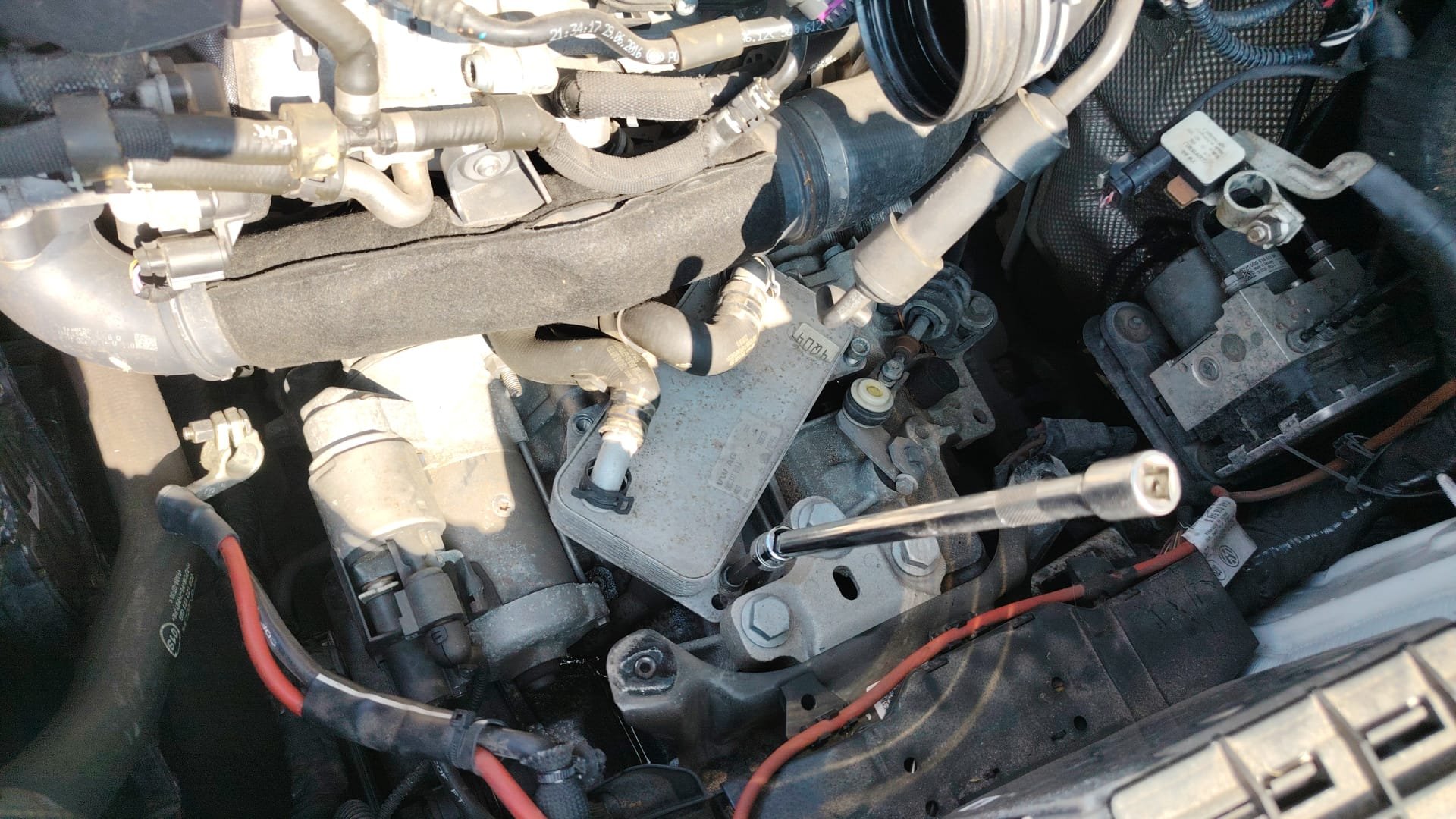
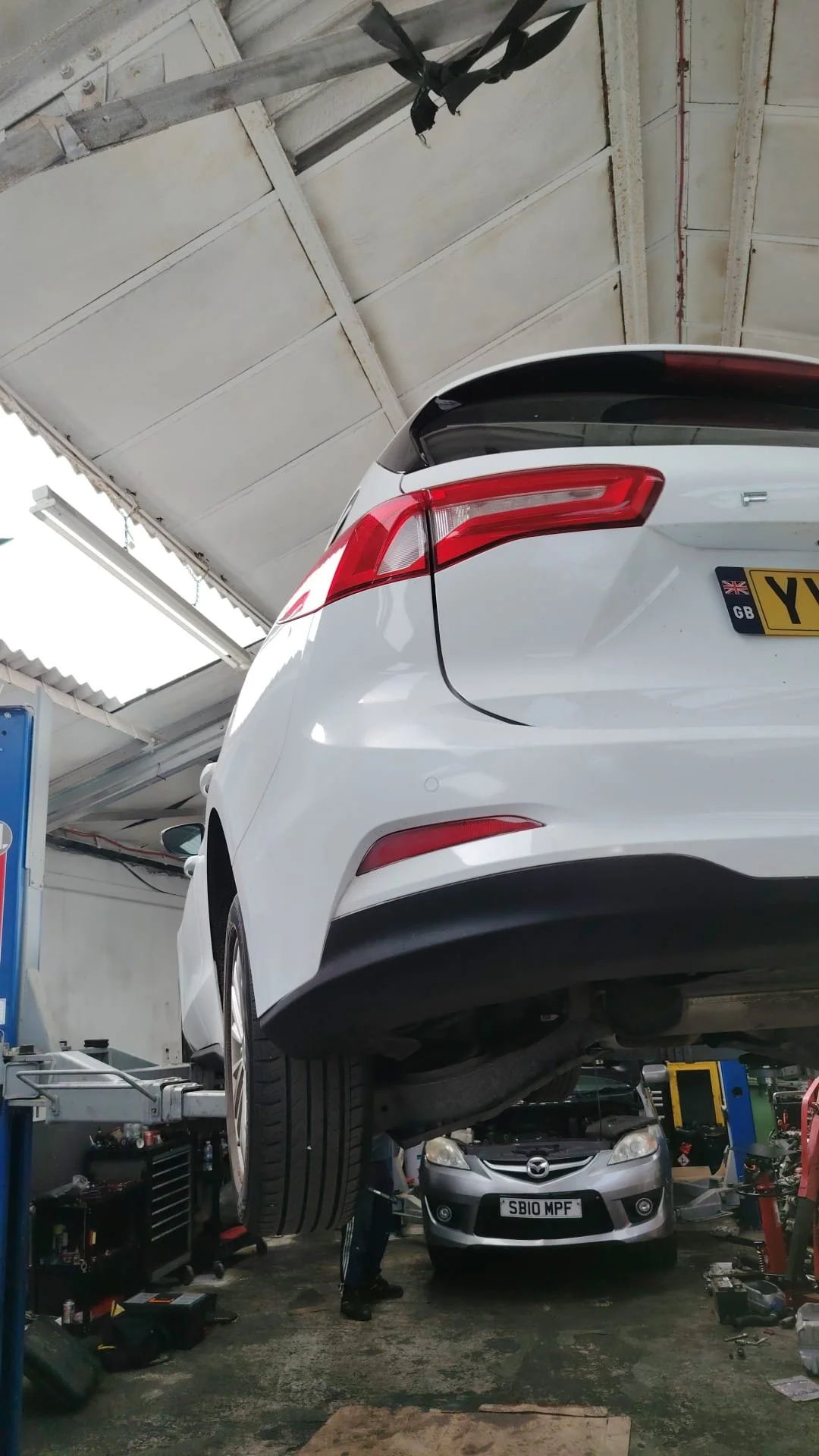
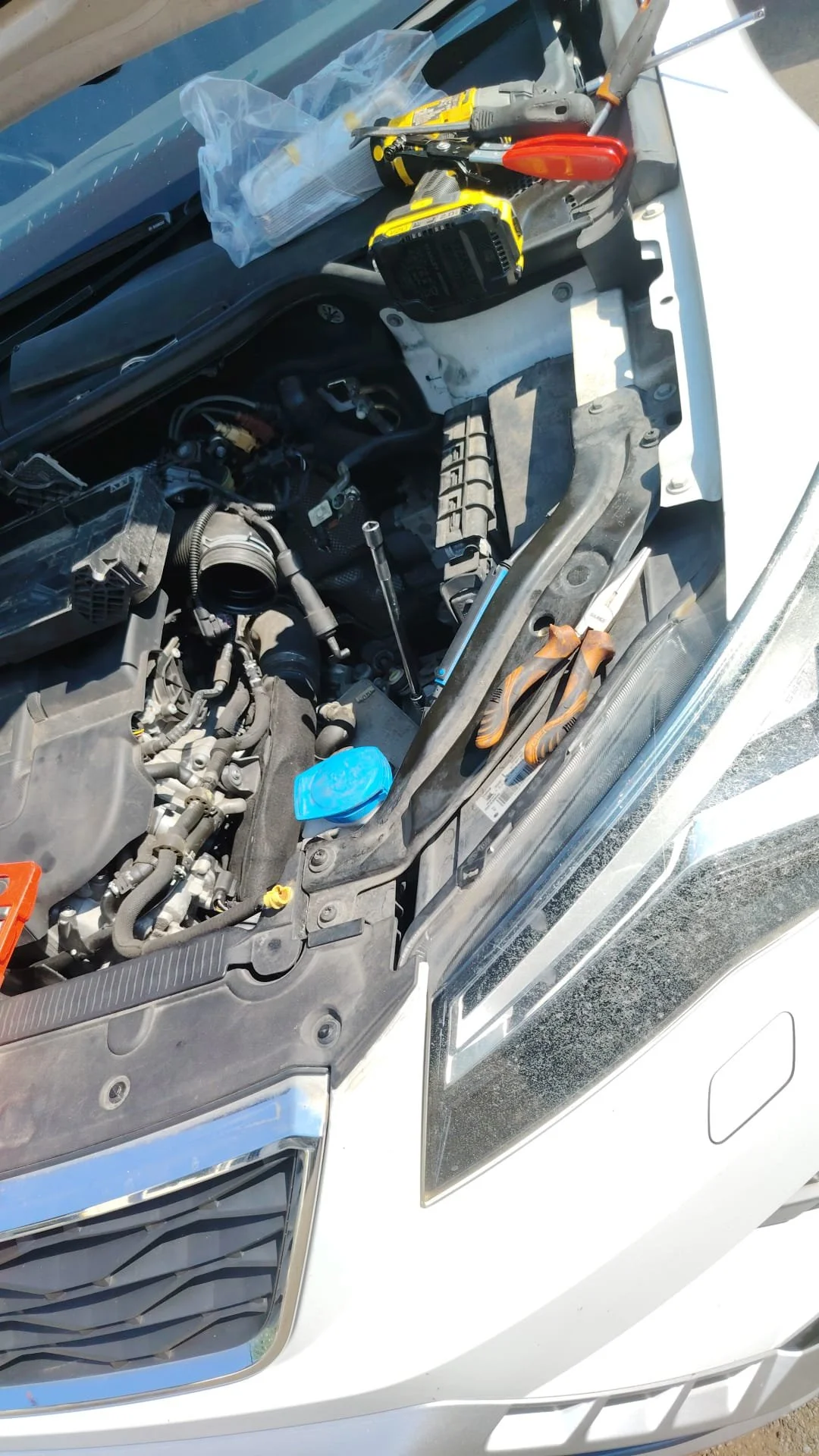
This Ford came into us at Platinum Vehicle Services in Walsall for a full service alongside something the owner had been putting up with for a while, a knocking noise coming from the suspension. They had noticed it most when going over speed bumps and pulling out of junctions, which told us straight away the noise was load dependent. That is a useful clue. Random noises that appear and disappear with no pattern are harder to pin down, but a knock that shows up under suspension movement narrows the search considerably.
The Car Went Straight on the Ramp to Find the Source of the Knock
You cannot properly diagnose a suspension knock from a test drive alone. A road test tells you roughly where in the car the noise is coming from and under what conditions, but to find the actual cause you need the wheels off the ground so the components can be moved by hand. We put the Ford up on the ramp and worked through the front suspension and steering components methodically, checking each joint and bush for play. Play means unwanted movement, the kind that should not be there when a joint is in good condition. When we got to the front lower wishbone, the ball joint at the end of it had visible movement when pushed and pulled. A ball joint connects the wheel hub to the suspension arm and allows the wheel to pivot when you steer while still moving up and down with the road surface. When the rubber boot splits or the joint wears internally, it develops slack, and that slack is what causes the knock every time the suspension compresses or extends.
A Worn Ball Joint Is a Braking and Steering Risk, Not Just a Noise
Leaving a worn ball joint is not simply a matter of tolerating an annoying knock. As the joint continues to wear, the amount of play increases. At a certain point the joint can no longer locate the wheel accurately, which affects both steering precision and braking. In a worst case scenario a severely deteriorated ball joint can separate, which means the wheel loses its connection to the suspension entirely. That is a situation that causes an immediate loss of control. We always tell customers this because the noise on its own sounds like a minor irritation, but the component itself is load bearing and safety critical. Catching it at the stage this Ford was at, with measurable play but still intact, is the right time to deal with it. Leaving it until the knock gets louder means the joint has worn further and may by that stage have started to affect the wishbone bush as well, adding to the repair cost.
New Ball Joint Fitted and the Full Service Completed Alongside
We replaced the worn front lower ball joint and retorqued everything to the manufacturer specification before lowering the car. With the suspension knock resolved we completed the full service, which covered the engine oil and filter, air filter, pollen filter and a check of all fluid levels, brake condition, tyre pressures and tread depths. Doing the service and the suspension work together in one visit meant the car was with us for a single session rather than two separate trips, which saves the owner time.
If you have been hearing a knock or clunk from your car, particularly over bumps, on corners or when braking, it is worth getting it checked before it develops further. Suspension wear is progressive and the longer a worn component is left, the more stress it places on the parts around it. We carry out suspension inspections, servicing and mechanical repairs at our workshop in Walsall, and we will tell you exactly what we find before any work is carried out. Book your car in with us at platinumvehicleservices.co.uk.
What's That Knocking Noise Coming from My Ford Fiesta?
If you're hearing a knocking noise from your Ford Fiesta, you're not alone. This is one of the most common concerns we see at our Walsall garage, and it's something that definitely needs attention. The good news is that most knocking sounds have identifiable causes, and once we know what's going on, we can help you make the right decision about repairs.
Over the years, my dad and I have diagnosed hundreds of Ford Fiestas with various knocking sounds. What we've learned is that the location, timing, and type of knock can tell us a lot about what's happening under the bonnet. Let me walk you through the three most common causes we see.
Engine Knock from Poor Quality Fuel or Carbon Build-up
Engine knock, sometimes called pinking, is when you hear a metallic tapping sound that gets worse when you accelerate or go uphill. This happens when the fuel in your cylinders ignites at the wrong time, creating pressure waves that knock against the cylinder walls.
In Ford Fiestas, this is often caused by using lower octane fuel than recommended, or carbon deposits building up in the combustion chamber over time. The engine management system tries to compensate, but sometimes it can't prevent the knock completely. When we see this issue, we'll show you exactly what's happening with a video inspection and discuss whether a good engine clean, higher octane fuel, or further investigation is needed.
Worn Engine Bearings Creating Rod Knock
A deeper, more rhythmic knocking that matches your engine speed could indicate worn big end bearings or main bearings. This is more serious than fuel knock because it means internal engine components are wearing against each other with insufficient lubrication.
This type of knock often gets worse as the engine warms up and may disappear briefly when you first start the car cold. Ford Fiesta engines, particularly higher mileage ones, can develop bearing wear if oil changes have been missed or the wrong oil specification has been used. We'll always show you the evidence before recommending any work, because bearing problems usually mean significant engine repairs or replacement.
Suspension and Drivetrain Knocks During Turning or Braking
Not all knocking comes from the engine. If you hear knocking when turning corners, going over bumps, or during braking, you're likely looking at suspension or drivetrain issues rather than engine problems.
Common culprits in Ford Fiestas include worn CV joints, particularly the outer ones which click when turning, or suspension components like drop links and shock absorber mounts. These sounds are usually more noticeable at lower speeds and when maneuvering. The good news is these are typically more straightforward repairs than engine issues, and we can show you exactly which component is worn using our video diagnostic approach so you can see what needs attention.
