

Nissan Juke Suspension Work Completed in Walsall
A Nissan Juke came into us here in Walsall recently with the owner reporting that the car felt unsettled on the road. He described it as bouncy over bumps and slightly vague through corners, the kind of feeling where you are not quite sure the car is doing exactly what you are asking it to do. That is always worth taking seriously, because the suspension is what keeps the tyres in contact with the road. When it is not working properly, everything from steering to braking is affected.
The Juke's Suspension Had Worn to the Point Where It Was Affecting the Car's Ability to Handle and Brake Safely
With the car up on the ramp, we worked through the suspension components methodically. The shock absorbers, which are the units that control how the suspension moves up and down and stop the car bouncing repeatedly after a bump, were showing clear signs of wear. A shock absorber in good condition damps movement quickly and keeps the tyre planted. When the internal valving wears out, the unit loses its ability to control that movement, and the tyre starts to skip and bounce rather than staying in contact with the road surface.
We also found wear in the top strut mounts. These are the rubber and bearing assemblies that sit at the top of the suspension strut and allow the suspension to turn with the steering. When they wear, you get a knocking or clunking noise over bumps and the steering can feel imprecise, as though there is a small delay between what you do with the wheel and what the car does. That matches exactly what the owner had described.
Leaving Worn Suspension Costs More to Fix Later and Creates a Real Braking Risk
It is worth being direct about what worn suspension actually means in practice. The Highway Code stopping distance for 30mph is 23 metres. That assumes the tyres are in proper contact with the road. Worn shock absorbers reduce that contact, particularly on uneven surfaces, and your actual stopping distance increases. That is not a mechanical inconvenience, it is a safety issue that affects how the car performs in an emergency.
Beyond safety, leaving worn suspension components in place puts extra load on the parts around them. When a shock absorber is not controlling movement properly, the additional stress transfers to the springs, the strut mounts, the CV joints and the tyres. Tyres on a car with failed shock absorbers wear unevenly and can need replacing significantly earlier than they should. A pair of shock absorbers on a Juke costs a fraction of two premature tyre replacements, so catching this early is straightforwardly cheaper.
We Replaced the Shock Absorbers and Top Strut Mounts and Checked the Full Suspension Before the Car Left
We fitted new shock absorbers to both front corners along with new top strut mounts. Once the new components were torqued to the correct settings, we checked the rest of the suspension, including the track rod ends, the anti-roll bar links and the lower wishbone bushes, to make sure nothing else was close to needing attention. Everything else was within acceptable limits. We road tested the car before it went back to the owner and the difference was immediate, the car was controlled, planted and responsive through corners in a way it had not been when it arrived.
Signs to Watch for on Your Own Car, and How to Book in With Us in Walsall
Suspension problems do not usually appear all at once. They develop gradually, which means drivers often adapt to them without realising how much the car has changed. The signs worth watching for are a bouncing or floating feeling after going over a bump, knocking or clunking noises from the front of the car, the car pulling to one side under braking, uneven tyre wear, or steering that feels loose or slow to respond. If any of those sound familiar, it is worth having it checked sooner rather than later.
At Platinum Vehicle Services in Walsall, we work on a wide range of vehicles including Mercedes, BMW, Audi, Volkswagen, Ford and Nissan, covering everything from suspension and brakes to full servicing, MOT testing, engine work and diagnostics. We are also conveniently located for customers coming to us from Bloxwich, Aldridge, Willenhall and Brownhills. If you would like us to take a look at your car, you can leave a message any time, 24 hours a day, 7 days a week, on 07970901354 and someone from the team will get back to you as soon as possible. You can also visit us at platinumvehicleservices.co.uk to find out more or get in touch.
Loose Bolts Left by Another Garage on a 2012 Hyundai ix35 in Walsall
We had a 2012 Hyundai ix35 brought into our Walsall workshop recently, and the owner had one clear concern. Another mechanic had carried out work on the car, and she had started to notice some movement and an occasional knock that had not been there before. She was not sure what was causing it, but her instinct told her something was not right. Her instinct was correct.
Bolts Left Insufficiently Tightened After the Previous Work
Once we got the car up on the ramp and worked through the areas that had been touched during the previous job, we found bolts that had not been torqued up properly. Torquing a bolt means tightening it to a specific measurement, measured in Newton metres, which is the unit used to express how much rotational force has been applied. Every bolt on a vehicle has a manufacturer specified torque value, and there is a good reason for that. Too loose and the bolt can work free over time. Too tight and you risk stripping the thread or cracking the component it is securing. Neither outcome is acceptable, and in this case the bolts were sitting well below where they needed to be.
What Happens When a Bolt Works Loose While You Are Driving
This is not a situation where you can monitor it and see how it goes. A bolt that is already under-tightened is being subjected to vibration, load and movement every time the car is driven. That process accelerates the loosening. Depending on where the bolt is and what it is holding, the consequences range from increased wear on surrounding components to outright failure while the car is in motion. If a bolt securing part of the suspension or braking system lets go on a road, the driver loses control of what the car does next. Beyond the immediate safety risk, components that move when they should not move cause accelerated wear to everything around them. What might be a straightforward retorque job at an early stage can become a much larger repair bill once other parts have been damaged.
We Worked Through the Vehicle Methodically and Retorqued Everything to Specification
We carried out a full check of all the areas that had been worked on previously, identified every bolt that was not sitting at the correct torque figure, and brought each one up to the manufacturer specification using a calibrated torque wrench. A calibrated torque wrench clicks or signals when the correct torque value has been reached, which removes any guesswork. We did not stop at the obvious areas. When a car comes in with work that has been done elsewhere, we check the surrounding components as well, because one bolt left loose is often a sign that the job was rushed more broadly. Once we were satisfied everything was correctly secured, we road tested the car to confirm the knock the owner had reported had gone. It had.
Signs to Watch for on Your Own Car After Any Mechanical Work
If your car has recently had work done anywhere and you notice a new knock, a vibration that was not there before, or any movement or noise when going over speed bumps or turning, do not leave it. These are common signs that something has not been reassembled correctly. It does not matter whether the work was done at a main dealer or a local garage, these things can happen, and the sooner they are caught the less damage is done. We see vehicles from across Walsall and the surrounding areas including Bloxwich, Aldridge and Willenhall, and jobs like this one are a reminder that a second opinion costs very little compared to what a loose component can cost you further down the road.
If you have had recent work done on your car and something does not feel right, bring it to us. We will check it over and tell you exactly what we find. We cover everything from routine car servicing and MOT testing through to diagnostics, brakes, suspension and engine repairs. Leave a message any time on 07970901354 and someone from the team will get back to you as soon as possible, or visit us at platinumvehicleservices.co.uk to book your car in.
2009 Mercedes CLS MOT, Wheel Bearing and Bush Repairs in Walsall
A 2009 Mercedes CLS came into us here at Platinum Vehicle Services for its MOT. The owner knew it needed to pass its test but had also noticed a low humming noise that seemed to get louder at higher speeds. That kind of noise is worth paying attention to, and once we got the car up on the ramp it became clear there was more going on beneath it than a straightforward MOT check.
The Wheel Bearing Had Worn Beyond an Acceptable Level and Was Flagging as a Safety Issue
When we inspected the wheel bearings, one had developed noticeable play and was generating the noise the owner had been hearing. A wheel bearing is the component that allows each wheel to spin freely on its hub. When it is in good condition you would not know it was there. When it wears, you start to feel and hear it. In this case, there was measurable movement in the bearing when we checked it by hand, which means the wheel was not sitting as firmly on the hub as it should be. On a vehicle travelling at motorway speeds, that is a genuine concern. A bearing that fails completely can, in a worst case, cause the wheel to seize or separate from the vehicle. At the stage this one was at, it was also putting additional load on surrounding components, which over time would have drawn more parts into the repair. Catching it at MOT stage kept the job contained.
A Worn Bush Was Causing the Suspension to Move in Ways It Should Not
We also found a worn suspension bush. A bush is a small rubber sleeve that sits between two metal parts in the suspension or steering system. Its job is to cushion movement and absorb vibration while keeping everything located correctly. When the rubber deteriorates, which it does gradually over time and is common on vehicles of this age, the metal parts start to contact each other directly. On this CLS the bush had cracked and lost its shape, leaving the suspension arm with more movement than the manufacturer allows. The effects of that are felt through the steering, the handling and the tyres. An out of tolerance bush causes uneven tyre wear, meaning the tyre wears faster on one edge than the other, which shortens its life and reduces grip in an emergency. It also causes a knocking sensation over uneven road surfaces. Left longer, the increased movement stresses the surrounding components and the repair scope widens. Addressing it alongside the wheel bearing, during the same visit, avoided a return journey and a second labour charge.
We Replaced the Bearing and Bush, Completed the MOT and Road Tested the Car Before It Left Us
We fitted a new wheel bearing to the affected corner and replaced the worn bush with a new rubber mounted unit. Once both repairs were complete we carried out the full MOT inspection and road tested the car to confirm the humming noise had gone and the steering felt as it should. The CLS left us with a clean MOT certificate and two faults resolved that, had they been left, would have cost more to put right and carried a growing safety risk the longer they were ignored.
What to Watch for on Your Own Car, and How to Book With Us in Walsall
If you notice a humming or rumbling sound that builds as your speed increases, particularly if it changes tone when you move the steering slightly left or right, that is worth having checked. It is a common sign of a wheel bearing starting to go. Knocking or clunking over speed bumps or rough road surfaces, or a car that feels vague or pulls slightly through a corner, can point to worn bushes. Neither of these faults tends to announce itself dramatically at first, which is why an MOT is often the point at which they get picked up.
At Platinum Vehicle Services in Walsall we work on Mercedes, BMW, Audi, Volkswagen, Ford and a wide range of other vehicles, covering everything from routine servicing and MOT testing through to suspension, brakes, engine work and complex diagnostics. We tell you what we find, explain what it means and let you make an informed decision. You can leave a message any time of day or night on 07970901354 and someone from the team will get back to you as soon as possible. To find out more about what we do or to get in touch, visit us at platinumvehicleservices.co.uk.
BMW 3 Series Shock Absorber Failure Diagnosed and Repaired in Walsall
A BMW 3 Series came into us here at Platinum Vehicle Services with a concern about the way it was riding and handling. The owner had noticed the car felt unsettled over bumps and was not sitting as confidently through corners as it should. Once we got it up on the ramp, it did not take long to find the cause.
The Shock Absorber Failed the Compression Test on the Spot
The first thing we do when suspension is in question is a basic but reliable check. We compress the strut rod by hand and watch what happens when we let go. On a shock absorber that is working correctly, the rod springs back firmly and without hesitation. On this BMW, it did not. The rod moved slowly and weakly, and you can see exactly that in the video below. That response tells us the damper inside the unit has failed.
The damper is the part that controls how quickly the suspension moves up and down. It is filled with hydraulic fluid, and when the piston moves through that fluid it creates resistance, which is what keeps the wheel from bouncing freely. When the fluid degrades or the seals fail, that resistance disappears and the suspension loses its ability to control movement.
A Failed Damper Means the Tyre Is Not Staying on the Road Properly
This is not a comfort issue. It is a safety issue. When the damper is no longer controlling the movement of the wheel, the tyre bounces rather than staying in firm contact with the road surface. That matters most when you brake or steer quickly. Braking distances increase because the tyre is not pressing consistently against the tarmac, and the car can pull or feel vague through a corner because the wheel is moving in ways the driver cannot predict or compensate for.
Left in this condition, the problem also gets worse and more expensive over time. A worn damper puts extra stress on the springs, the top mounts and the tyres themselves. Uneven tyre wear is a common result, meaning you end up replacing tyres earlier than you should. It can also knock the wheel geometry out of alignment, which adds further cost further down the line.
We Replaced the Shock Absorber and Checked the Rest of the Corner
We replaced the failed shock absorber unit on the BMW and checked the surrounding components at the same time. That means looking at the spring for any signs of cracking or settling, checking the top mount which sits at the top of the strut and connects it to the car body, and looking over the rest of the suspension geometry. Once everything was in order the car went back out on a road test to confirm the handling felt correct before it went back to the owner.
Watch for These Signs on Your Own Car and Book in With Us in Walsall
Suspension wear tends to creep up gradually, which means many drivers adjust to the change without realising how far things have gone. Signs to look out for on your own car include a bouncy or wallowing feeling over uneven surfaces, the car dipping noticeably at the front when you brake, pulling to one side, or a knocking sound from the suspension on bumps.
We carry out suspension inspections and repairs here in Walsall and we can check your car properly if anything feels off. If you are concerned about your suspension or want us to take a look, visit us at platinumvehicleservices.co.uk to book your car in.
Nissan Qashqai Lower Suspension Arm Replacement in Walsall
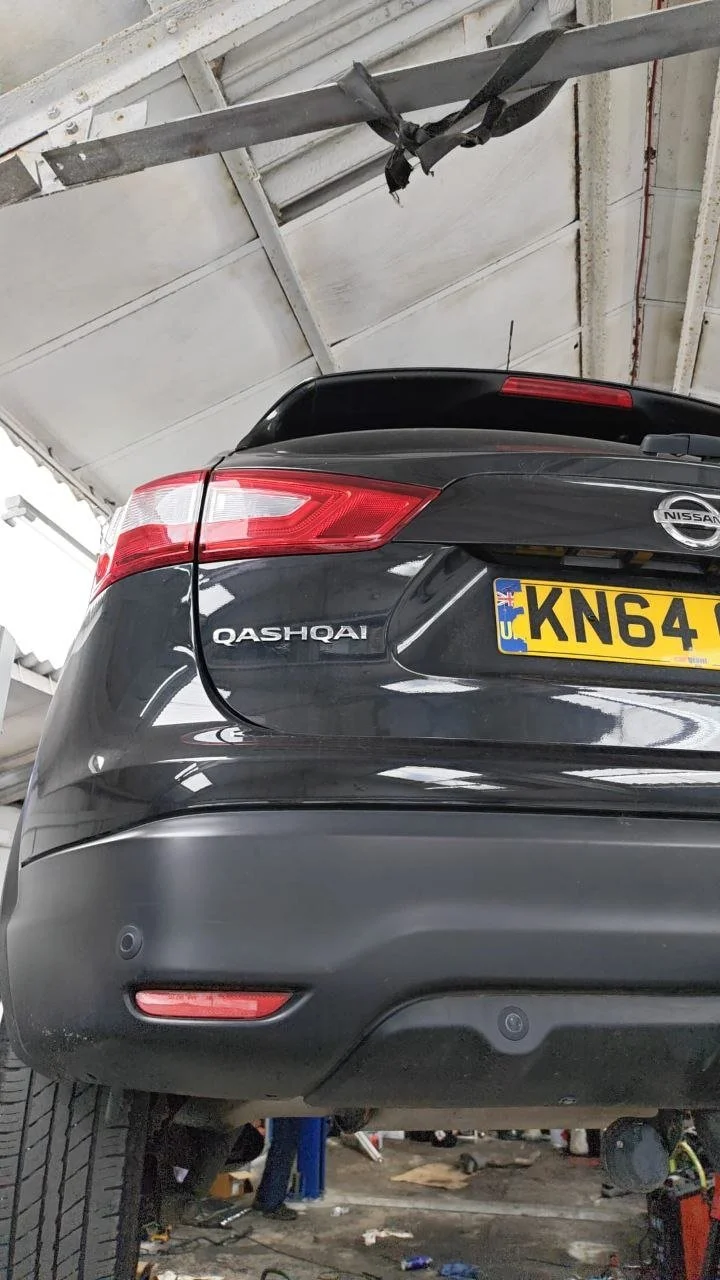
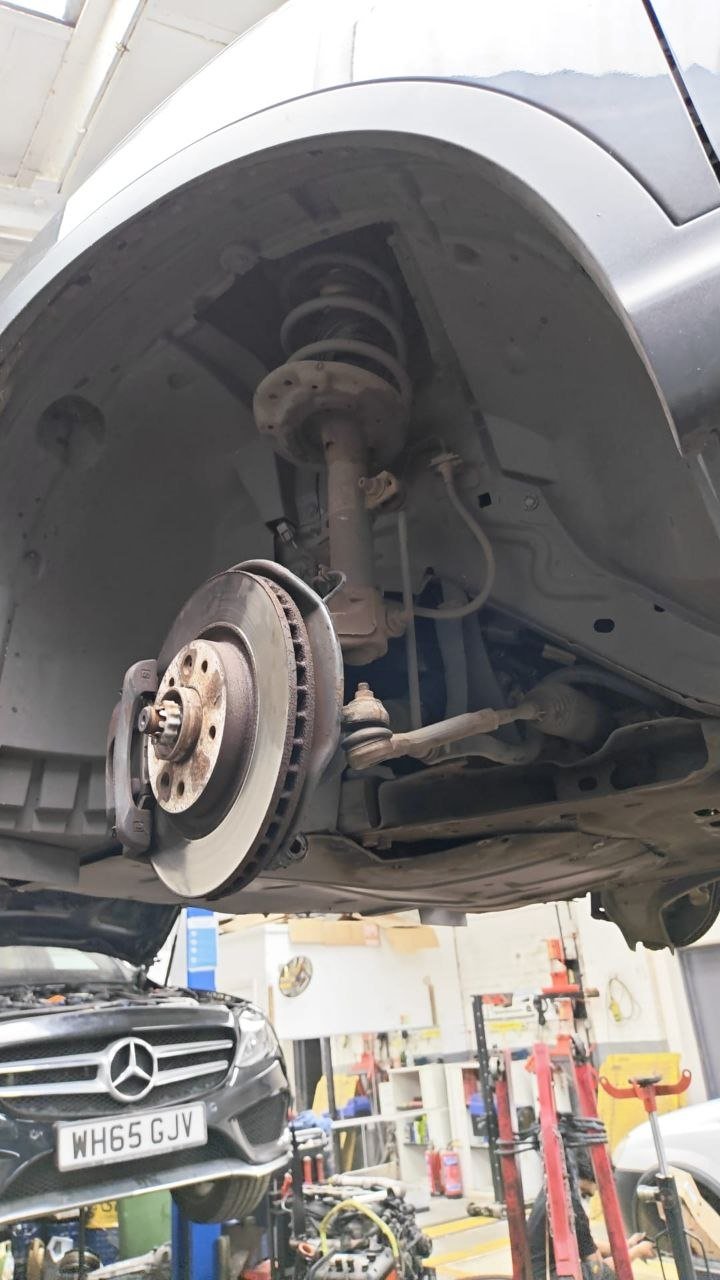
A lovely Nissan Qashqai came into us here in Walsall with a suspension concern. The owner had noticed the car was not handling the way it should, and there was an unsettled feel through the steering and the body of the car on uneven surfaces. Suspension faults can creep up gradually, which means drivers often adapt to the way the car feels without realising how far it has deteriorated. We put the Qashqai on the ramp and had a look at what was going on underneath.
The Lower Suspension Arm Had Worn to the Point Where It Was No Longer Doing Its Job
With the car lifted, we inspected the front suspension components. The lower suspension arm was the problem. To explain what that is, the lower suspension arm is the metal link that connects the wheel hub, which is the assembly the wheel bolts onto, to the cars chassis. It controls how the wheel moves up and down as it travels over the road surface. When it is in good condition it keeps the wheel positioned correctly and allows controlled movement. When the arm or its associated joints and bushes wear out, that control is lost. On this Qashqai the arm had worn to the point where there was movement where there should be none. That kind of unwanted movement affects the angle the wheel sits at, and the way the car steers and tracks on the road.
Leaving a Worn Suspension Arm Creates a Safety Risk and Causes Tyre Wear That Adds to the Bill
If a worn lower suspension arm is left in place, two things happen. First, the handling becomes progressively worse. The car will feel vague through bends, may pull to one side and will react poorly to sudden changes in direction. In an emergency braking or steering situation, that translates directly into reduced control at the moment you need it most. Second, because the wheel angle is no longer being held correctly, the tyres begin to wear unevenly. You will often see the inner or outer edge of the tyre scrubbing down faster than the rest of the contact patch. That means replacing tyres earlier than you should need to, which adds cost on top of the suspension repair you will need to do eventually anyway. Sorting it promptly is always the cheaper and safer outcome.
We Replaced the Lower Suspension Arm and Checked the Surrounding Components Before the Car Left
We removed the worn lower suspension arm and fitted a new replacement unit. Once the new arm was in place we checked the surrounding suspension components, including the adjacent joints and any other parts that take load through that corner of the car, to make sure nothing else needed attention while we were in there. The Qashqai left us sitting correctly and handling as it should, with the steering feeling settled and responsive again.
Suspension work is something we carry out regularly at our garage in Walsall, covering everything from individual worn components like this lower arm through to full assessments of how a car's suspension system is performing. If your car feels unsettled over bumps, pulls to one side, or the steering feels less precise than it used to, those are signs worth acting on before the problem develops further and the repair cost grows with it. Uneven tyre wear on any corner of the car is another indicator that something in the suspension may be out of order. If you are noticing any of those signs, bring your car to us and we will take a look. You can book in at platinumvehicleservices.co.uk.
Volkswagen Golf GTI Suspension Repair in Walsall
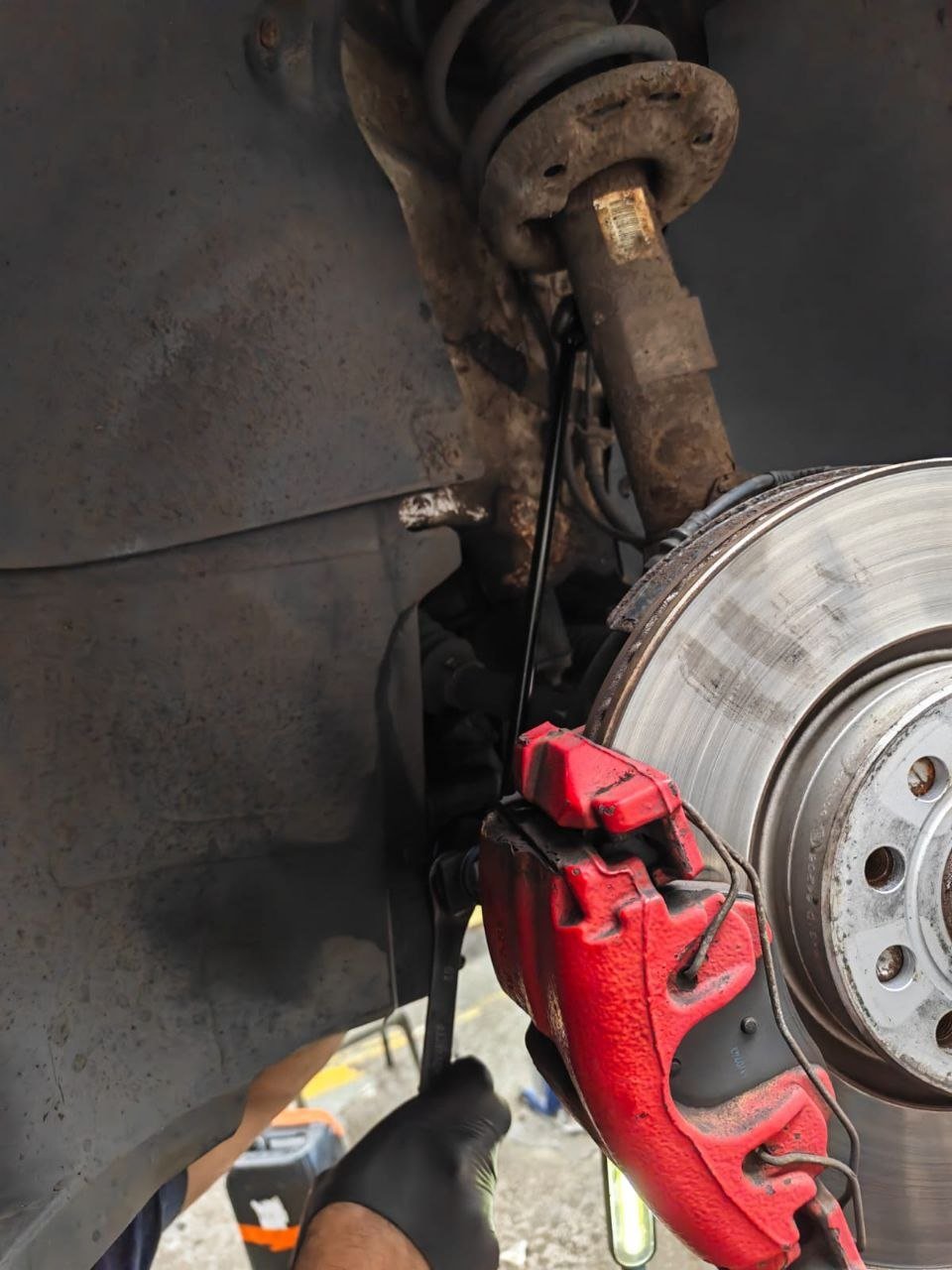
A white Volkswagen Golf GTI came into us here in Walsall with a suspension concern on the front end. The owner had noticed the car was not handling as it should. There was some vagueness in the steering and the front end was not tracking through corners the way a GTI should. It was the kind of thing that is easy to put off, but on a car with that much performance potential it is not something you want to leave.
The Front Suspension Had Worn to the Point Where It Was Affecting How the Car Handled
We put the car on the ramp and started with the front wheel assembly, which is where the driver had noticed the issue. With the wheel off we could get proper access to inspect the suspension components closely. Suspension on a car like this is made up of several linked parts including arms, joints and links that all work together to keep the wheel in the correct position as the car moves over the road. When one part wears, the whole system starts to lose its geometry, which is the technical word for the precise angles and alignment the manufacturer has set for how the wheel sits and moves. Once geometry is off, the car becomes less predictable, particularly under braking and through corners.
Left Any Longer, the Wear Would Have Spread to Connected Parts and Increased the Repair Cost
This is the point where a lot of drivers make the job more expensive than it needs to be. Suspension components are connected. When one worn part is left in place it puts extra stress on the parts around it because they are now doing more work than they were designed to. What starts as a single component job can become two or three components if it is left. Beyond cost, there is a real safety concern. Worn front suspension affects how the car responds when you brake hard or need to make a sudden steering input. At motorway speeds that matters. The GTI is a car that a lot of owners push a little harder than a standard hatchback, which makes the condition of the suspension even more important.
We Replaced the Worn Components, Checked the Surrounding Parts and Confirmed the Repair Before the Car Left
We replaced the worn suspension components on the front of the car, taking care to check the surrounding parts at the same time. Once new components were fitted we checked everything was correctly torqued, meaning tightened to the exact specification the manufacturer requires, before road testing the car to confirm the repair had brought everything back to how it should feel. The owner drove away with the front end handling properly again.
Suspension work is something we deal with regularly at our Walsall garage across a wide range of makes and models. If your car is pulling to one side, feels vague through corners, knocks or clunks over bumps, or the steering wheel is not centred when you are driving in a straight line, those are all signs that something in the suspension or steering is worth having looked at. Catching it early keeps the cost down and keeps you safe on the road. You can book your car in with us at platinumvehicleservices.co.uk.
Skoda Fabia Rear Subframe and Suspension Replacement in Walsall
The Subframe Was Being Replaced and the Shocks and Springs Were Worn Beyond What We Would Leave on Any Car
With the Fabia up on the hoist and the rear end fully accessible, we could see clearly that the shock absorbers and coil springs had worn beyond a reasonable point. The shocks were not providing the damping they should be. On a healthy shock absorber, the damper resists movement through the spring travel, keeping the wheel in contact with the road surface through corners and over uneven ground. When that resistance goes, the wheel bounces rather than tracks. The springs themselves were also showing their age, sitting lower than they should and lacking the tension needed to support the rear of the car properly. These are not cosmetic issues. They affect how the car behaves under braking, how it handles on bends, and how predictable it feels when you need to react quickly.
Leaving Worn Shocks and Springs in Place Would Have Put More Stress on the New Subframe and Created a Real Handling Risk
If we had fitted a new subframe and sent the car on its way with the old shocks and springs still on, those components would have continued to degrade. The knock-on effect is that a worn shock puts extra strain on the mountings around it, and a subframe that is constantly absorbing movement it should not have to deal with will not last as long as it ought to. Beyond the mechanical cost of getting to that point again, there is a straightforward safety issue here. A car with poor rear damping does not behave predictably under load. If you brake hard, the rear can feel unstable. If you go over a pothole or a ridge in the road, the wheel can skip rather than stay planted. At motorway speeds that matters considerably. Addressing everything at the same time, while the car is already apart, is the sensible and more cost-effective approach.
New Shock Absorbers and New Black Coil Springs Fitted to Both Rear Corners Alongside the Subframe
We fitted a full set of new rear shock absorbers along with new black coil springs to both corners. With the subframe already out, access to these components was clean and direct, which kept the additional labour time down compared to doing it as a standalone job. The new springs sit at the correct ride height and hold the correct tension. The new shocks will dampen movement properly through the spring travel, keeping the rear wheels in consistent contact with the road. The car was also checked over thoroughly while it was in the air, because that is just how we work. When you have a car fully elevated and the underside visible, you look at what is there. If something else needs attention, we tell you. We do not flag things unnecessarily, but we do not ignore things either.
If Your Car Feels Unsettled at the Rear, It Is Worth Getting It Looked At Before It Becomes a Bigger Job
Rear suspension wear tends to creep up on you. Because it happens gradually, many drivers do not notice until the car feels noticeably different from how it used to. Signs to watch for include a bouncy or floaty feeling over speed bumps that does not settle quickly, a clunking noise from the rear when going over uneven road surfaces, the back of the car sitting lower on one side than the other, or a feeling of instability when braking at speed. If any of those sound familiar on your car, it is worth getting it looked at sooner rather than later. The longer worn suspension components are left, the more stress is placed on the surrounding parts, including bushes, mountings, and in some cases the subframe itself. We carry out suspension inspections and repairs regularly here in Walsall, and we will always give you a clear picture of what is going on before any work is agreed. If you want to book your vehicle in, you can reach us at platinumvehicleservices.co.uk.
Ford Fiesta Worn Ball Joint Diagnosed and Inspected at Our Walsall Garage
A blue Ford Fiesta came into us here at Platinum Vehicle Services after the owner noticed the car had not been feeling quite right through the front end. There was no dramatic single event that prompted it, just a gradual sense that the steering was not as precise as it used to be and an occasional knock that had been getting a little more noticeable over time. We put it straight up on the lift and started working through the front suspension to find out what was going on.
The Lower Control Arm Ball Joint Had Excessive Side to Side Play and Was Clearly Past the Point of Acceptable Wear
With the vehicle raised, we went through the front suspension methodically. When we got to the lower control arm ball joint on the front, the problem was obvious. A ball joint is the pivot point that connects the lower control arm to the steering knuckle. It allows the wheel to move up and down with the road surface while also turning left and right when you steer. It needs to be tight. When we gripped the joint and applied lateral pressure, there was clear, visible side-to-side movement that should not have been there. A healthy ball joint has essentially no free play at all. What we were seeing on this Fiesta was a joint that had worn through its housing and was moving independently of where it should be sitting. That is not a grey area. It is a failed component.
Leaving a Worn Ball Joint on the Road Means the Wheel Can Move in Ways the Driver Cannot Predict or Control
It is worth being clear about what a ball joint actually does when it fails completely, because this is not just a comfort issue. The ball joint is what keeps the wheel correctly located under the car. If that joint lets go while the vehicle is moving, the wheel can collapse outward or inward depending on the forces acting on it at that moment. At low speed in a car park, that could mean loss of steering control. At higher speeds on a dual carriageway, the consequences are significantly more serious. Short of a catastrophic failure, the deterioration in handling is also progressive. The excessive play we found means the wheel is not sitting at a consistent geometry. The steering will pull, the car will feel vague, and the driver is working harder than they should be just to hold a straight line. Tyre wear also becomes uneven because the contact patch is not staying where it should be. A tyre that wears unevenly costs you money at the next replacement and can develop irregular wear patterns that reduce grip. The longer a worn ball joint is left, the more it tends to damage surrounding components as well, including the control arm bushes and the steering knuckle itself, which pushes the repair cost upward.
The Ball Joint Was Identified for Replacement and the Full Front Suspension Checked as Part of the Inspection
We documented what we found and presented it clearly to the owner so they could see exactly what we were looking at. The excessive play in the lower control arm ball joint was the primary finding, and replacement was the only appropriate course of action. As part of the inspection process, we also worked through the rest of the front suspension to make sure nothing else had been affected by the additional stress that a worn joint puts on surrounding components. Catching problems at this stage, before a joint fails entirely, is the difference between a manageable repair and a much more involved job.
If your car has been pulling to one side, producing a knock or clunk through the front end, or just not feeling as settled through corners as it used to, those are the signs that something in the suspension or steering is worth looking at. It does not always mean the ball joint specifically, but the front suspension is the right place to start. We see these faults regularly at our garage in Walsall, and in most cases, the sooner the vehicle comes in, the simpler and less expensive the repair turns out to be. If any of that sounds familiar, get in touch with us or book online at platinumvehicleservices.co.uk and we will take a proper look.
Collapsed Wishbone Bush Found on a Nissan Juke During MOT in Walsall
A Nissan Juke came in recently for its MOT and during the inspection on the pit we spotted something the owner had no idea about. No pulling to one side, no clunking the driver had noticed, nothing obvious from inside the car. But underneath the vehicle the story was a different one entirely. One of the front suspension wishbone bushes had completely collapsed, and it was the kind of fault that needed dealing with before the car went anywhere near the road.
The Bush on One Side Had Collapsed Flat With Metal Running Against Metal, While the Bush on the Other Side Still Showed the Correct Gap and Alignment
When we looked at the front suspension over the pit one of the wishbone bushes was visibly compressed flat. A wishbone bush is a rubber and metal component that sits within the wishbone arm and cushions the movement between the suspension and the subframe. When it is in good condition you can see a clear gap around the rubber and the whole assembly sits correctly. On this car the bush on one side had collapsed entirely. No gap left at all, the rubber had given way, and the metal was effectively running against metal. We compared it to the bush on the opposite side of the car which still looked as it should, with the proper spacing and alignment visible. The difference was clear and it left no doubt about the diagnosis.
A Collapsed Bush Affects Wheel Alignment, Stability Under Braking, and If Left Long Enough Spreads Damage to the Wishbone Arm and Subframe
Wishbone bushes wear down over time through a combination of age, mileage, and the general punishment that suspension components take from road surfaces. The roads around Walsall and the wider West Midlands are not always kind to suspension, and bushes that have been on a car for several years will eventually reach the point where the rubber breaks down and the component collapses. When that happens the wishbone arm can no longer move as it is supposed to. Wheel alignment is affected, the car becomes less stable under braking and cornering, and the forces that were being absorbed by the bush are now being transferred directly to other components. Left long enough the damage spreads to the wishbone arm itself, the subframe, and surrounding parts, which turns what is already a repair job into a much larger and more expensive one. On an MOT a collapsed wishbone bush is a failure, and rightly so. It is a direct safety concern.
Bush Replaced, Suspension Geometry Checked, MOT Completed and the Car Back on the Road the Same Day
We replaced the collapsed wishbone bush and made sure the suspension geometry was correct once the work was done. Before handing the car back we checked everything over to confirm the repair was solid and the vehicle was safe. The Juke went through its MOT once the fault had been addressed and the owner drove away in a car that was in a safe, roadworthy condition.
If your car has been feeling slightly different through corners, if there is any vagueness in the steering, or if you have noticed any knocking from the front end, those are signs that could point to worn suspension bushes or other related faults. Sometimes, as with this Juke, there are no obvious signs at all, which is exactly why a proper inspection matters. If you are based in Walsall or anywhere across the West Midlands bring it into Platinum Vehicle Services and we will take a proper look. Book in at platinumvehicleservices.co.uk or come in and speak to us directly.
What's That Knocking Noise Coming from My Ford Fiesta?
If you're hearing a knocking noise from your Ford Fiesta, you're not alone. This is one of the most common concerns we see at our Walsall garage, and it's something that definitely needs attention. The good news is that most knocking sounds have identifiable causes, and once we know what's going on, we can help you make the right decision about repairs.
Over the years, my dad and I have diagnosed hundreds of Ford Fiestas with various knocking sounds. What we've learned is that the location, timing, and type of knock can tell us a lot about what's happening under the bonnet. Let me walk you through the three most common causes we see.
Engine Knock from Poor Quality Fuel or Carbon Build-up
Engine knock, sometimes called pinking, is when you hear a metallic tapping sound that gets worse when you accelerate or go uphill. This happens when the fuel in your cylinders ignites at the wrong time, creating pressure waves that knock against the cylinder walls.
In Ford Fiestas, this is often caused by using lower octane fuel than recommended, or carbon deposits building up in the combustion chamber over time. The engine management system tries to compensate, but sometimes it can't prevent the knock completely. When we see this issue, we'll show you exactly what's happening with a video inspection and discuss whether a good engine clean, higher octane fuel, or further investigation is needed.
Worn Engine Bearings Creating Rod Knock
A deeper, more rhythmic knocking that matches your engine speed could indicate worn big end bearings or main bearings. This is more serious than fuel knock because it means internal engine components are wearing against each other with insufficient lubrication.
This type of knock often gets worse as the engine warms up and may disappear briefly when you first start the car cold. Ford Fiesta engines, particularly higher mileage ones, can develop bearing wear if oil changes have been missed or the wrong oil specification has been used. We'll always show you the evidence before recommending any work, because bearing problems usually mean significant engine repairs or replacement.
Suspension and Drivetrain Knocks During Turning or Braking
Not all knocking comes from the engine. If you hear knocking when turning corners, going over bumps, or during braking, you're likely looking at suspension or drivetrain issues rather than engine problems.
Common culprits in Ford Fiestas include worn CV joints, particularly the outer ones which click when turning, or suspension components like drop links and shock absorber mounts. These sounds are usually more noticeable at lower speeds and when maneuvering. The good news is these are typically more straightforward repairs than engine issues, and we can show you exactly which component is worn using our video diagnostic approach so you can see what needs attention.
