

Vauxhall Vivaro Brake Pad, Disc and Caliper Replacement in Walsall
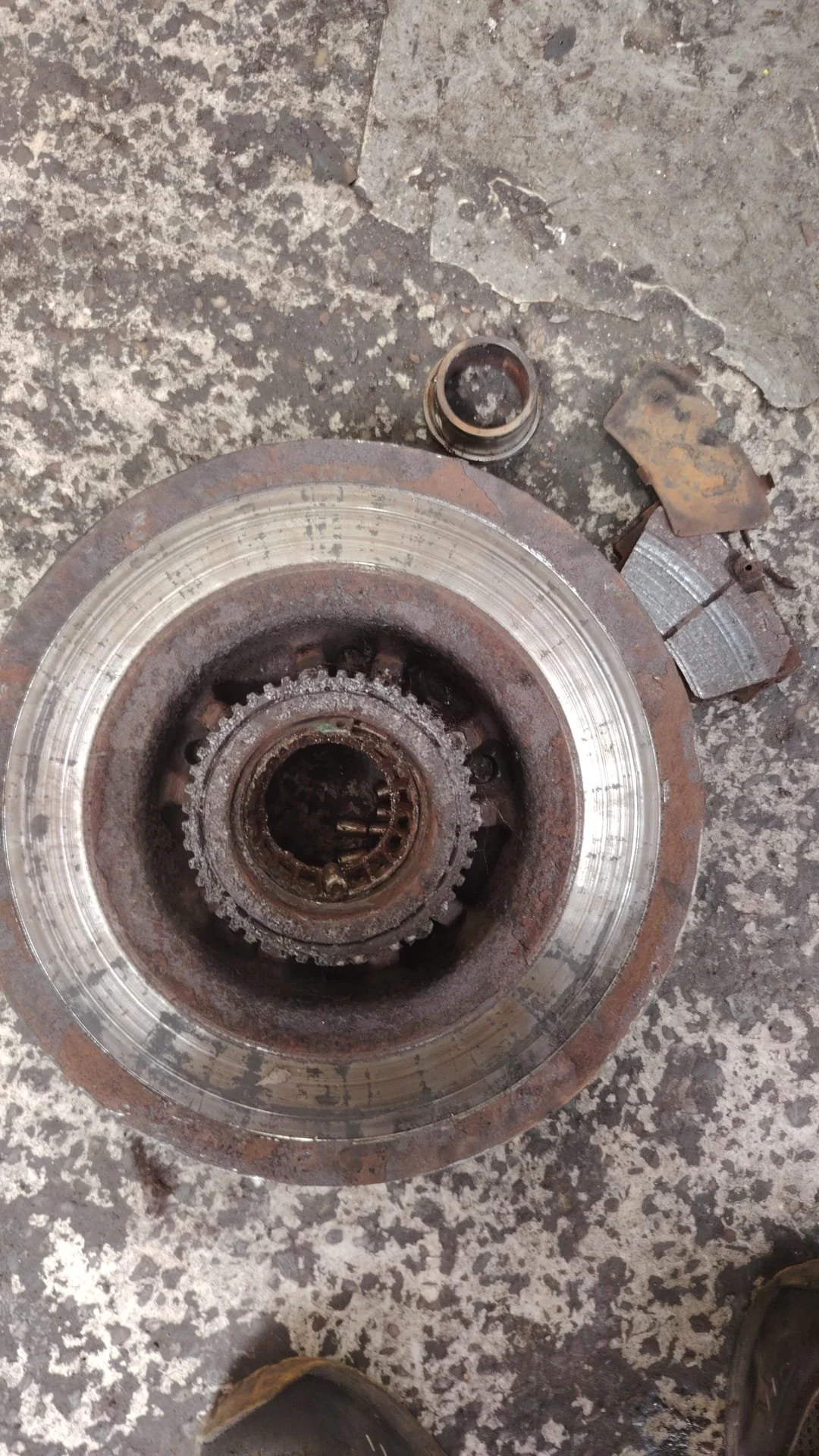
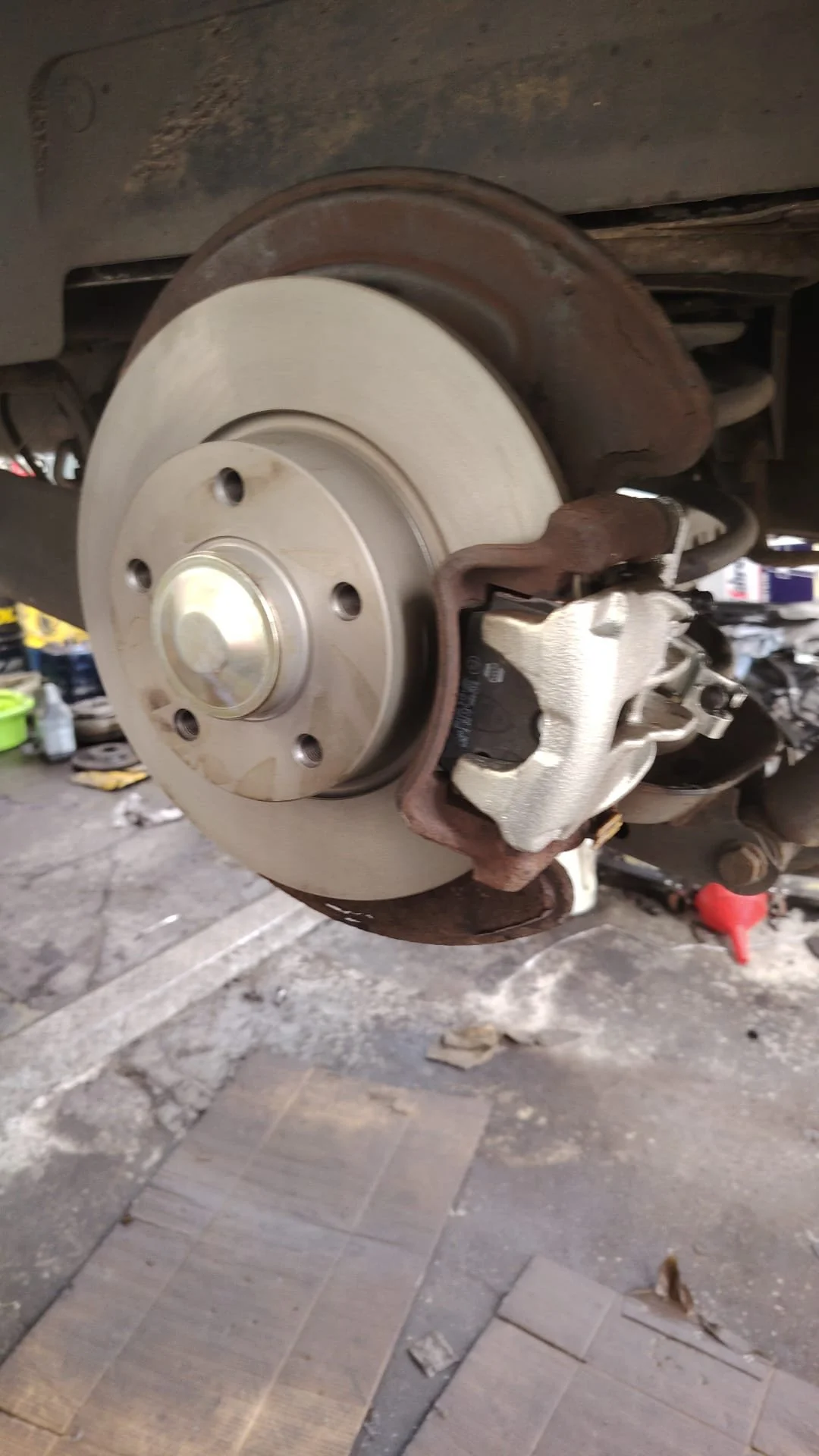
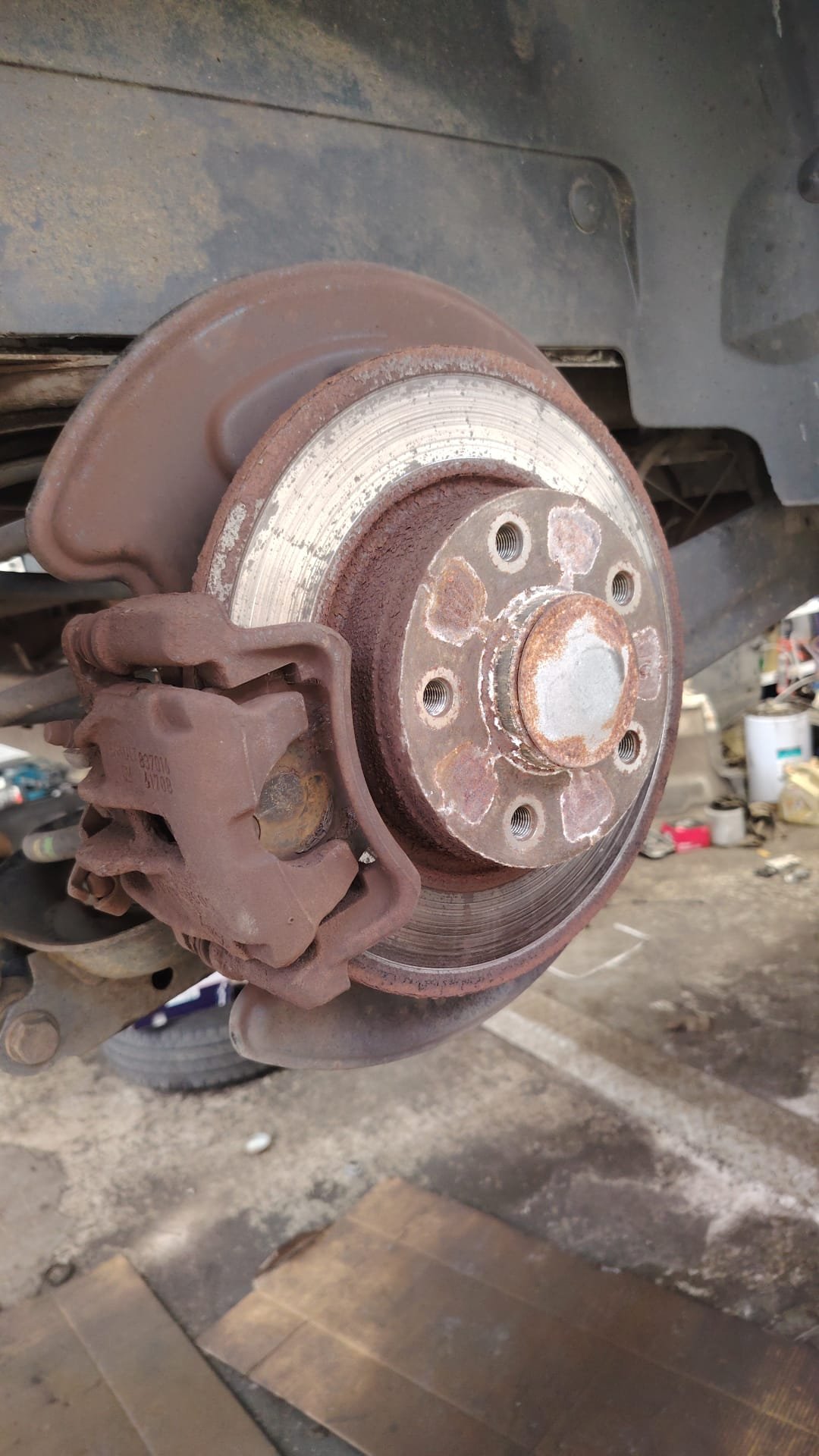
We had a Vauxhall Vivaro in with us recently, brought in because the driver had noticed the brakes were feeling less responsive and there was a low grinding noise when stopping. For a van that size, carrying loads day in and day out, the braking system works hard and the components wear faster than most owners expect. When we got it up on the ramp and took the wheel off, it was clear this one needed more than a straightforward pad swap.
The Pads Were Worn Down and the Disc Had Reached the Limit of Safe Use
With the wheel removed we could inspect the brake pad thickness directly. The pads had worn down to around 2mm. The minimum we would consider safe for a vehicle of this weight is 3mm, and the legal limit sits at 1.6mm. At 2mm there is very little material left before the metal backing plate makes contact with the disc. Once that happens, the disc surface gets scored and grooved, and what started as a pad replacement becomes a disc replacement as well. In this case the disc had already reached its minimum thickness limit, measured with a micrometer at the thinnest point. A brake disc that has worn to its minimum can flex slightly under heavy braking, which reduces your stopping power at exactly the moment you need it most.
The caliper, which is the clamp that squeezes the pads against the disc to stop the vehicle, was also seized. A seized caliper means one side of the pad is pressing harder than the other, or pressing constantly even when you are not braking. That uneven pressure is what accelerates wear on both the pads and the disc unevenly, and it also generates heat that can lead to brake fade, where the brakes become progressively less effective the harder you use them.
Leaving These Faults Would Have Cost More and Created a Real Safety Risk on the Road
A van like the Vivaro can weigh over 2,000 kilograms when loaded. At 60 miles per hour, the difference between brakes that are working correctly and brakes that are not can mean several extra metres of stopping distance. That is not a small margin. On a motorway or dual carriageway, those metres matter considerably. Beyond the safety side, leaving worn pads and a scored disc means the disc surface deteriorates further with every journey. A disc that could have been replaced on its own becomes a disc and caliper job regardless, and you are paying for both whether you act now or in three months time. Acting when the fault is first found is always cheaper.
This Model Has a Disc With a Built In Wheel Bearing, So the Whole Assembly Comes Off as One Unit
One thing worth explaining about this particular Vivaro is that the brake disc on this axle has an integrated wheel bearing. The bearing is the component that allows the wheel to spin smoothly on the axle. On most cars the disc and the bearing are separate parts, but on this model they are combined into a single assembly. That means when the disc needs replacing, you cannot remove just the disc. The entire unit, disc and bearing together, has to come off as one piece. We used a hub puller to draw the assembly free from the axle without causing damage to the surrounding components. The new disc and bearing assembly was then pressed and torqued into place to the manufacturer specification. Once everything was fitted we bled the brake system to remove any air from the hydraulic lines, because air in the lines causes a soft or spongy pedal feel and reduces braking response. A full road test confirmed the pedal feel was firm and the braking performance was correct before the van went back to the owner.
What to Watch For on Your Own Vehicle and How to Book in With Us in Walsall
Brake jobs like this one are a regular part of what we do here at Platinum Vehicle Services in Walsall. We work on vans as well as cars, and we carry out everything from a single pad replacement through to full brake overhauls involving discs, calipers and brake fluid changes. If you notice any of the following, get your vehicle checked sooner rather than later, a grinding or squealing noise when braking, a pulsing or vibrating feeling through the brake pedal, the van or car pulling to one side when you brake, or a pedal that feels softer or lower than it normally does. Any one of those signs can mean the brakes are at or near the point where they need attention.
We are based in Walsall and serve drivers and van operators across the West Midlands. You can find out more and book your vehicle in at platinumvehicleservices.co.uk. If you would prefer to leave a message, you can reach us on 07970901354 at any time, 24 hours a day, seven days a week, and someone from the team will get back to you as soon as possible.
Renault Megane Brake Discs and Pads Replaced in Walsall
We had a Renault Megane in recently where the owner had noticed the brakes were not feeling right. Longer stopping distances than usual and a grinding sensation through the pedal when slowing down. That kind of feedback is always worth taking seriously, so we got it straight on the ramp for a proper look.
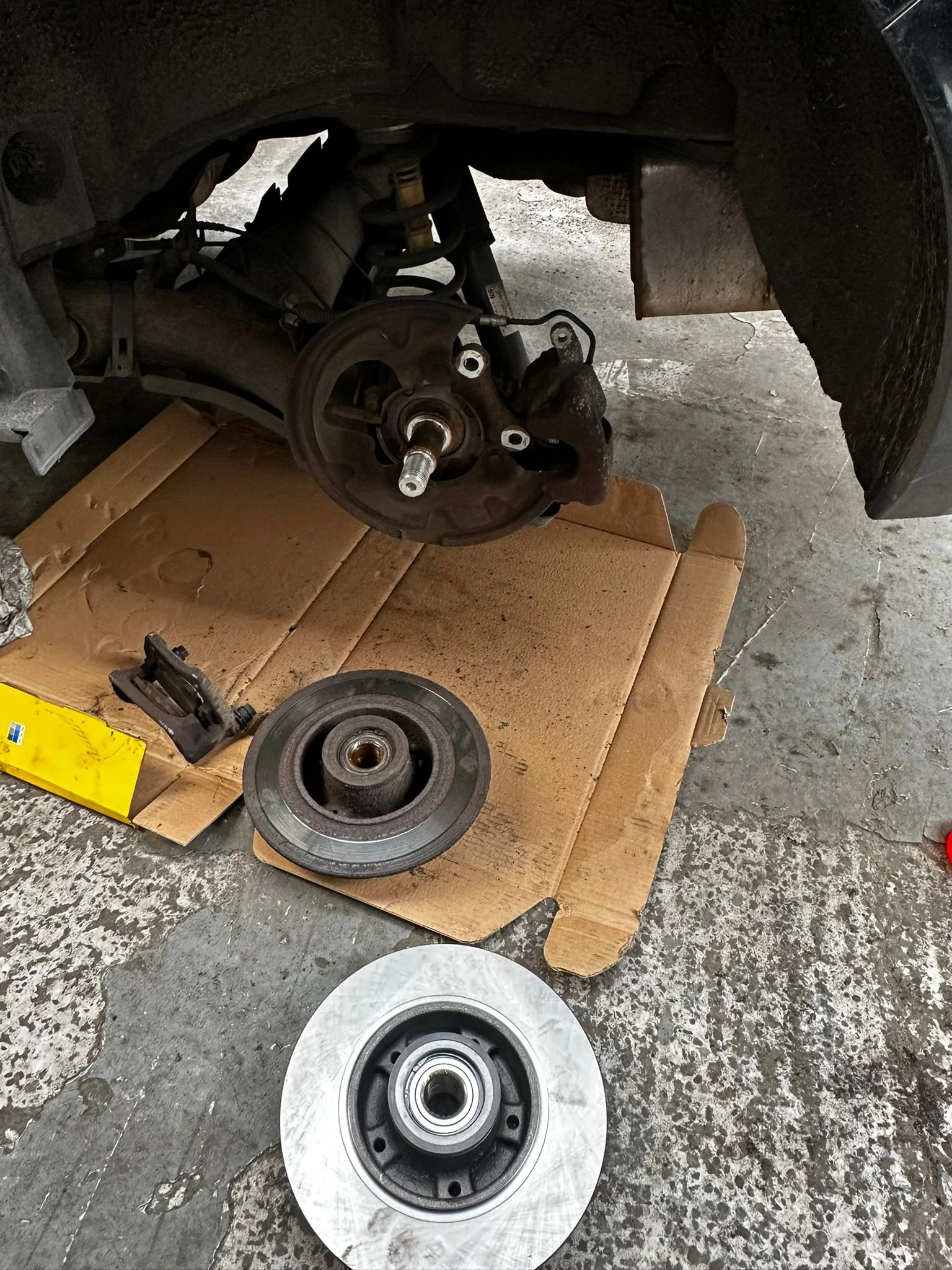
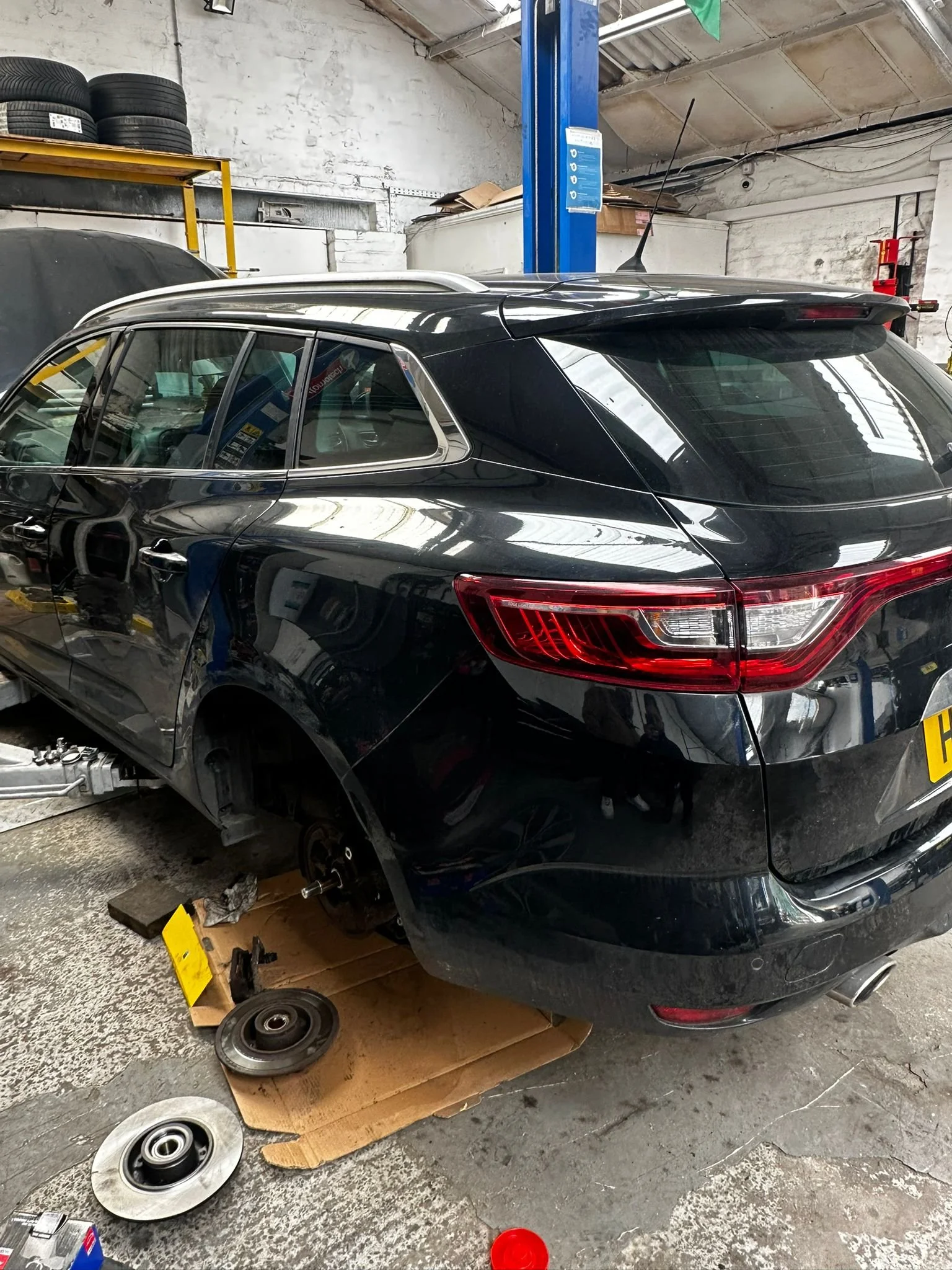
Pads Worn to the Metal and Discs Scored Across the Full Braking Surface
Once the wheels were off we could see exactly what was going on. The brake pads had worn down well past the point where they offer reliable stopping power. On a set of pads in good condition you would expect to see several millimetres of friction material remaining. These had gone. The discs had also deteriorated, with visible scoring across the braking surface and measurable thinning where the pad had been working against them. When pads wear that far down the metal backing starts to contact the disc directly, which is exactly what was causing the grinding sensation the driver had been feeling through the pedal. Neither the discs nor the pads were safe to leave in place.
Worn Brakes Increase Your Stopping Distance Without You Necessarily Noticing Until It Is Too Late
Brakes are the most important safety system on any vehicle. The problem with brake wear is that it happens gradually, so the change in stopping distance creeps up on you rather than hitting you all at once. By the time the grinding starts, the situation has usually been developing for a while. Scored or thinned discs can also warp under heat, which produces a pulsing or vibrating sensation through the pedal under braking. In serious cases heavily worn discs can crack under the stress. Driving on components in this condition puts real risk into every journey, not just the emergency stops.
New Discs and Pads Fitted on Both Sides of the Axle and the Car Checked Throughout Before It Left Us
We replaced the brake discs and pads on both sides of the axle. It is important to replace brake components in pairs rather than just the side that looks worst, because mismatched components cause uneven braking and can pull the car to one side under load. Once everything was fitted and torqued to the correct specification we checked the full system over before handing the car back. The pedal response was firm and confident straight away, which is how it should feel.
If your car is taking longer to stop than it used to, if you can feel grinding, squealing, or pulsing through the brake pedal, or if your brake warning light has come on, do not leave it. Bring your vehicle into Platinum Vehicle Services in Walsall and we will get it on the ramp and tell you exactly what is going on. We work on all makes and models and serve customers across the West Midlands. Book in at platinumvehicleservices.co.uk or come in and speak to us directly.
How Can You Tell if Your VW Crafter Has Had Poor Brake Work Done?
Your VW Crafter is likely the backbone of your business, and there's nothing more important than knowing your brakes are safe and reliable. Unfortunately, not all brake work is carried out to the same standard.
Over the years, we've seen countless Crafters come into our workshop where previous brake repairs have been done poorly or with substandard parts. The consequences can be serious, not just for your safety but also for your business operations and legal compliance.
Warning Signs You Can Spot Yourself
There are several telltale signs that suggest your Crafter's brake work might not have been done properly. If your brake pedal feels spongy or travels further to the floor than it used to, this could indicate air in the brake lines or incorrect bleeding procedures.
Listen out for grinding, squealing, or clicking noises when you brake. While some noise can be normal, persistent or loud sounds often point to poor quality pads, incorrect fitting, or missing anti-squeal shims that should have been replaced during the service.
Pay attention to how your van pulls when braking. If it veers to one side consistently, this might mean the brake components weren't properly cleaned, lubricated, or aligned during installation.
What Poor Workmanship Looks Like Under the Hood
When we inspect Crafters that have had questionable brake work, we often find several common issues. Brake fluid that looks dirty or contaminated suggests the system wasn't properly flushed, or cheap fluid was used instead of the correct DOT specification.
We frequently see brake pads that have been fitted incorrectly, sometimes even backwards, or without the proper copper grease on contact points. This leads to premature wear and potential safety issues down the line.
Another red flag is when we find mismatched brake components or parts that clearly aren't designed for your specific Crafter model. Quality workshops will always use the right parts for your van's year and specification.
The Legal and Safety Implications You Need to Know
Poor brake work on your Crafter isn't just an inconvenience, it can have serious legal consequences. If your van fails an MOT due to brake issues that should have been properly addressed in previous work, you might find yourself off the road unexpectedly.
More importantly, if poorly maintained brakes contribute to an accident, you could face legal liability issues. Insurance companies will investigate the maintenance history of commercial vehicles involved in incidents, and substandard repairs could affect your coverage.
That's why we always provide detailed videos of any brake work we carry out, showing you exactly what we've found and what needs doing. You deserve to understand what's happening with your vehicle, and having that documentation protects both you and us.
If you're concerned about previous brake work on your Crafter, don't wait until your next MOT. A thorough brake inspection can give you peace of mind and keep you legally compliant on the roads.
