

VW Golf Mechanical Issues Diagnosed and Repaired in Walsall
We had a VW Golf come into us recently at Platinum Vehicle Services. The owner had been putting up with a few things for a while, a warning light sitting on the dashboard, a low rumbling noise that got louder at certain speeds, and a general feeling that the car was not quite right under braking. None of those things on their own would stop you driving, but together they were telling a clear story. We put the car on the ramp and started working through it properly.
A Worn Wheel Bearing Was Causing the Rumble and Needed Replacing Before It Failed Completely
The noise the driver had noticed was coming from the nearside front wheel bearing. A wheel bearing is a set of steel balls or rollers packed inside a ring of metal that allows the wheel to spin freely around the axle. When it wears out, the clearance inside it increases and you get that low, droning rumble that tends to change pitch as you steer left or right. We measured the play in the hub and it was outside the acceptable tolerance, which confirmed the bearing had worn beyond the point where it could be left. On a Golf of this age and mileage, that is not unusual. The concern with leaving a bearing in that condition is not just the noise. As the wear increases, the wheel can develop lateral movement. At motorway speeds that movement becomes unpredictable, and in a hard braking situation the wheel is not as stable as it needs to be. We pressed out the old bearing and fitted a new one, then checked the hub for any scoring that could affect how the new bearing seats.
The Engine Management Warning Light Was Traced to a Fault With the Oxygen Sensor
We plugged our diagnostic reader into the car's OBD port, which is a standardised socket usually found beneath the dashboard. The reader communicates with the car's engine management system and pulls out any stored fault codes. The code that came back pointed to the downstream oxygen sensor on the exhaust. An oxygen sensor measures the level of unburnt fuel leaving the engine and feeds that information back to the engine management unit so it can adjust the fuel mixture. When the sensor gives inaccurate readings, the engine runs on the wrong mixture and fuel economy drops. On this Golf the live data from the sensor was erratic, dropping in and out rather than giving a steady signal. That is a sign the sensor itself has failed rather than there being a wiring fault. We replaced the sensor and cleared the fault code, then ran the engine through a full drive cycle to confirm the light did not return. It did not.
Leaving Either of These Faults Would Have Cost More and Created Real Risk
If the bearing had been left another few thousand miles, the wear would have progressed to the point where the hub itself could have been damaged. At that stage you are not just paying for a bearing, you are paying for a hub assembly as well, and the labour time increases significantly. The oxygen sensor fault is less dramatic in the short term, but running on a poor fuel mixture over time causes the catalytic converter, which is the emissions cleaning unit in the exhaust, to work harder than it should. Catalytic converters are expensive components, often between 300 and 600 pounds or more depending on the vehicle, and premature failure caused by an ignored sensor fault is an avoidable cost.
If Your Golf or Any Other Vehicle Is Showing Signs Like These, Book It In With Us in Walsall
This kind of job is exactly what we do day to day here in Walsall. Whether it is a warning light you have been ignoring, a noise that comes and goes, or a feeling through the steering wheel or pedal that something is not right, those are all worth getting looked at before they develop into something more serious and more expensive. We work on Volkswagen, Mercedes, BMW, Audi, Ford and a wide range of other vehicles, covering everything from routine servicing and MOT testing through to suspension, brakes, engine diagnostics and complex mechanical repairs. If you notice a rumbling or droning noise that changes when you steer, a dashboard warning light, a vibration through the wheel, or a pulling sensation when you brake, do not leave it. The sooner we look at it, the simpler and cheaper it usually is to sort. You can leave us a message any time, 24 hours a day, 7 days a week, on 07970901354 and someone from the team will come back to you as soon as possible. You can also find out more about what we offer at platinumvehicleservices.co.uk.
Ford Focus Rear Shock Absorber and Brake Repair in Walsall
A Ford Focus came into our Walsall workshop recently with the owner reporting that the car felt unsettled at the back, particularly over bumps and through corners. When we got it on the ramp and took a proper look, it became clear there were two separate problems that both needed attention before the car went back on the road.
The Rear Left Shock Absorber Had Failed and Was Leaking Oil
The rear left shock absorber had given up. A shock absorber is the component that controls how your car body moves after hitting a bump or dip in the road. When it is working properly, it dampens that movement and keeps the tyre in firm contact with the road surface. When it fails, the car bounces and rocks in a way that is difficult to predict, especially at speed or when changing direction quickly.
This one was visibly leaking hydraulic oil down the side of the unit, which is a clear sign the internal seals have gone. Once a shock absorber starts leaking like this, it loses its ability to control body movement and no amount of driving around it will improve the situation. The handling becomes genuinely unpredictable, and in a sudden swerve or emergency stop the car may not respond the way you expect it to. That is not a fault you want to leave.
The Rear Brake Pads Were at 3mm and the Discs Were Corroded
On top of the suspension issue, the rear brake pads were worn down to approximately 3mm. The legal minimum is 1.5mm, but by the time pads reach 3mm you are not far from the point where the metal backing plate begins to make contact with the disc. Once that happens, the disc surface gets scored deeply and you end up replacing discs as well as pads. A pad replacement on its own is a straightforward cost. Adding discs because the pads were left too long roughly doubles it.
The discs themselves were showing a layer of surface corrosion, which is common on rear brakes that do not always work as hard as the fronts. We assessed them carefully and addressed the disc condition as part of the job before fitting the new pads.
A New Shock Absorber and Fresh Brake Pads Fitted Before Road Test
We replaced the failed rear left shock absorber with a new unit and fitted new brake pads to the rear axle. Once everything was torqued up correctly we road tested the car to confirm the handling had settled and the brakes were bedding in as expected. The owner got the car back with the rear suspension doing its job again and brakes that had proper material left on them.
What to Watch For on Your Own Car
If your car feels bouncy or unsettled over rough surfaces, takes longer than expected to settle after a bump, or pulls slightly when braking, any of those things are worth having checked. On brakes, a grinding or scraping noise when you slow down usually means the pads are very low. Do not wait until the noise starts to book it in, because by that point the discs are often already damaged.
We carry out this kind of work regularly here in Walsall, covering suspension, brakes and general mechanical repairs across a wide range of vehicles. If something on your car does not feel right, bring it in and we will take a look. You can book an appointment at platinumvehicleservices.co.uk.
Ford Full Service and Suspension Knock Diagnosed in Walsall
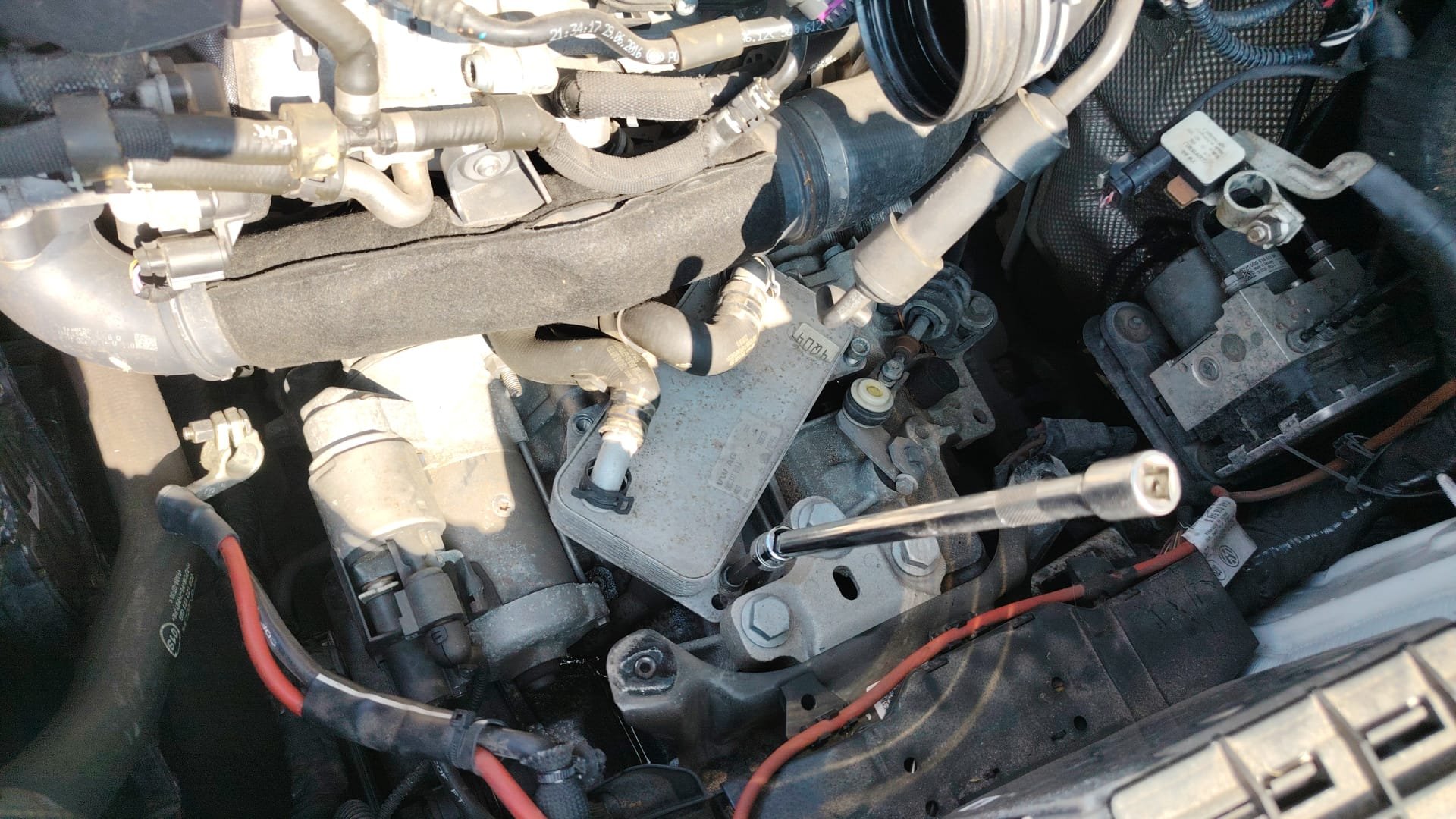
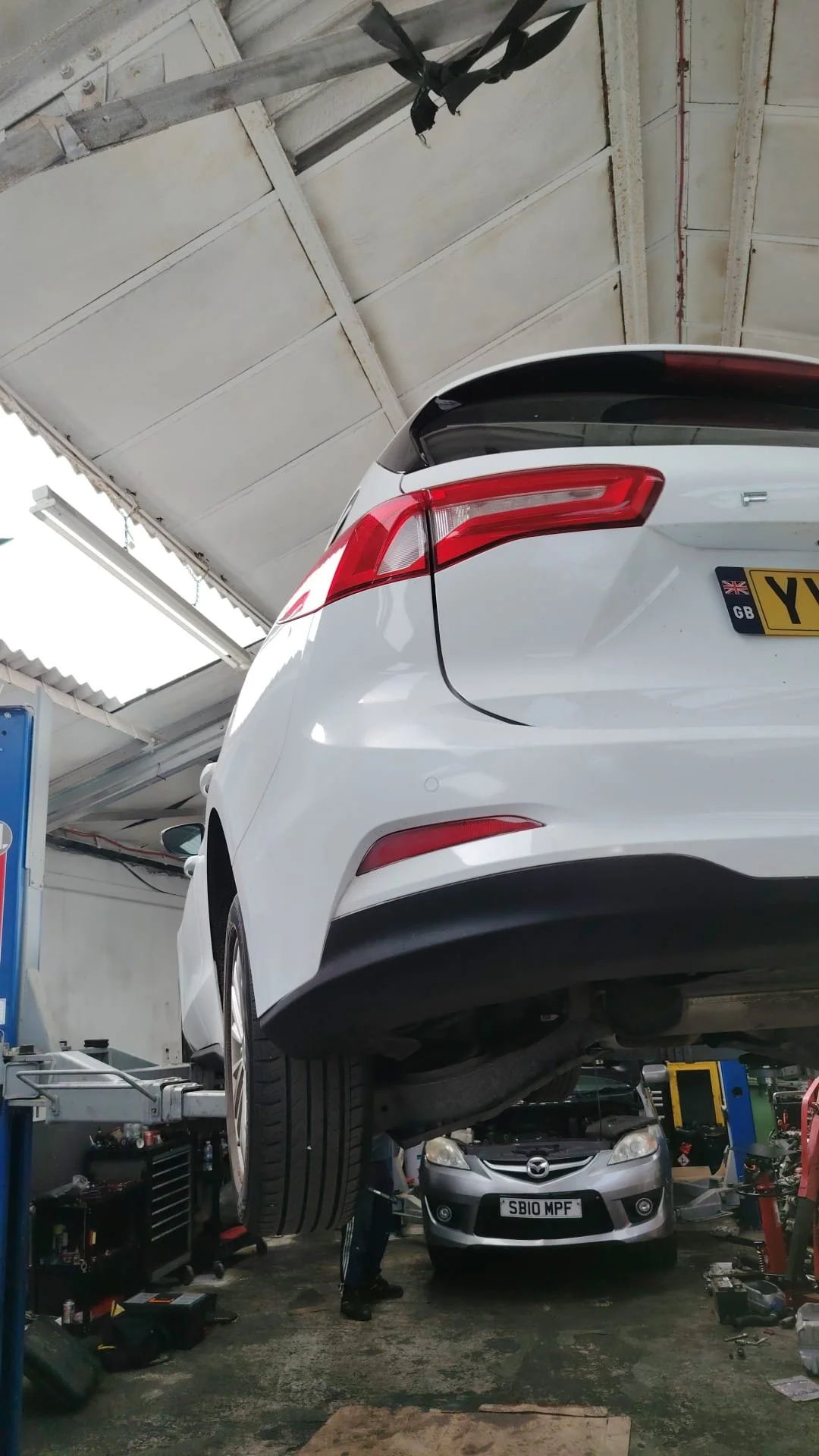
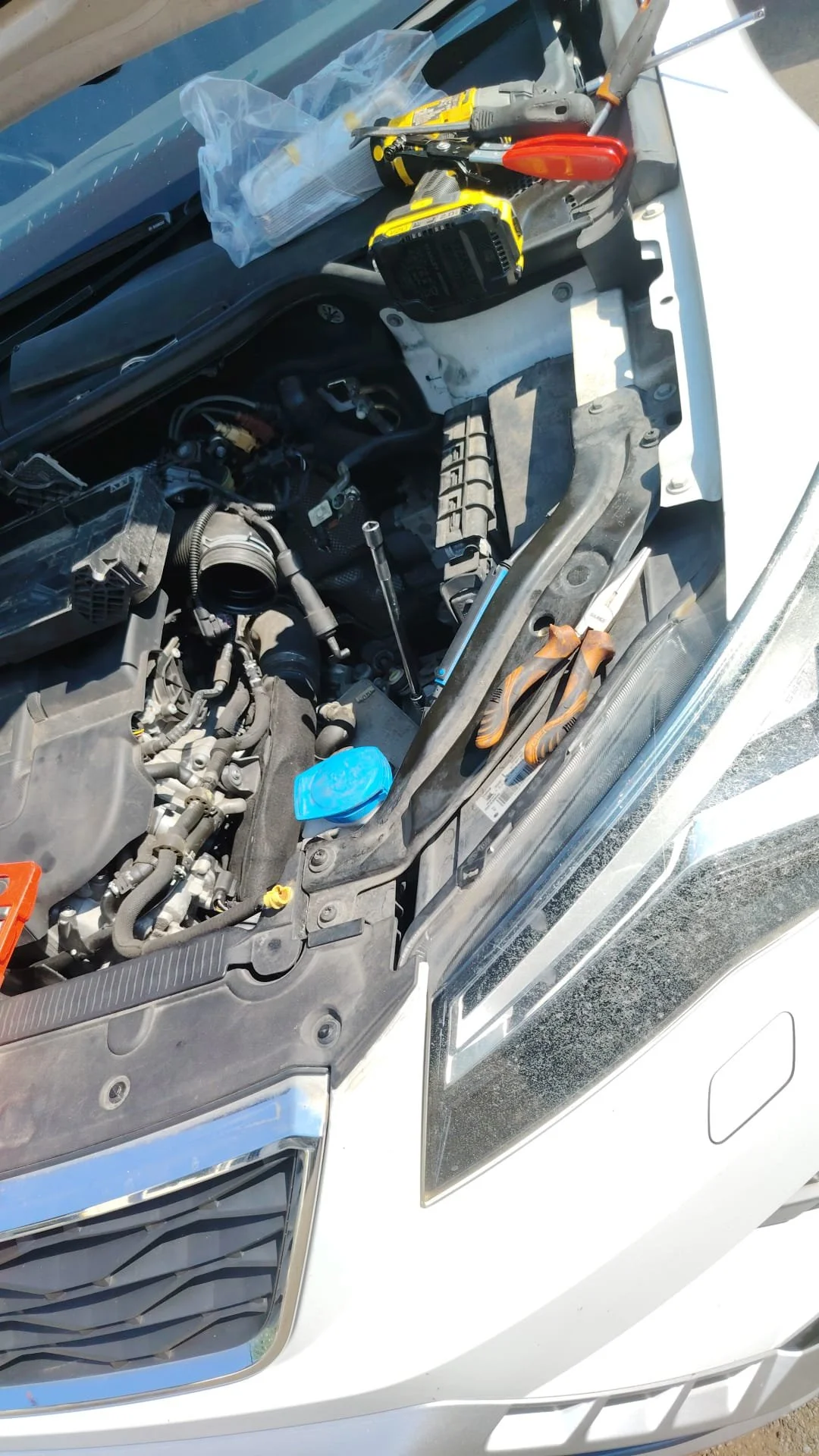
This Ford came into us at Platinum Vehicle Services in Walsall for a full service alongside something the owner had been putting up with for a while, a knocking noise coming from the suspension. They had noticed it most when going over speed bumps and pulling out of junctions, which told us straight away the noise was load dependent. That is a useful clue. Random noises that appear and disappear with no pattern are harder to pin down, but a knock that shows up under suspension movement narrows the search considerably.
The Car Went Straight on the Ramp to Find the Source of the Knock
You cannot properly diagnose a suspension knock from a test drive alone. A road test tells you roughly where in the car the noise is coming from and under what conditions, but to find the actual cause you need the wheels off the ground so the components can be moved by hand. We put the Ford up on the ramp and worked through the front suspension and steering components methodically, checking each joint and bush for play. Play means unwanted movement, the kind that should not be there when a joint is in good condition. When we got to the front lower wishbone, the ball joint at the end of it had visible movement when pushed and pulled. A ball joint connects the wheel hub to the suspension arm and allows the wheel to pivot when you steer while still moving up and down with the road surface. When the rubber boot splits or the joint wears internally, it develops slack, and that slack is what causes the knock every time the suspension compresses or extends.
A Worn Ball Joint Is a Braking and Steering Risk, Not Just a Noise
Leaving a worn ball joint is not simply a matter of tolerating an annoying knock. As the joint continues to wear, the amount of play increases. At a certain point the joint can no longer locate the wheel accurately, which affects both steering precision and braking. In a worst case scenario a severely deteriorated ball joint can separate, which means the wheel loses its connection to the suspension entirely. That is a situation that causes an immediate loss of control. We always tell customers this because the noise on its own sounds like a minor irritation, but the component itself is load bearing and safety critical. Catching it at the stage this Ford was at, with measurable play but still intact, is the right time to deal with it. Leaving it until the knock gets louder means the joint has worn further and may by that stage have started to affect the wishbone bush as well, adding to the repair cost.
New Ball Joint Fitted and the Full Service Completed Alongside
We replaced the worn front lower ball joint and retorqued everything to the manufacturer specification before lowering the car. With the suspension knock resolved we completed the full service, which covered the engine oil and filter, air filter, pollen filter and a check of all fluid levels, brake condition, tyre pressures and tread depths. Doing the service and the suspension work together in one visit meant the car was with us for a single session rather than two separate trips, which saves the owner time.
If you have been hearing a knock or clunk from your car, particularly over bumps, on corners or when braking, it is worth getting it checked before it develops further. Suspension wear is progressive and the longer a worn component is left, the more stress it places on the parts around it. We carry out suspension inspections, servicing and mechanical repairs at our workshop in Walsall, and we will tell you exactly what we find before any work is carried out. Book your car in with us at platinumvehicleservices.co.uk.
2017 Audi A4 Wheel Bearing and Anti Roll Bar Replacement in Walsall
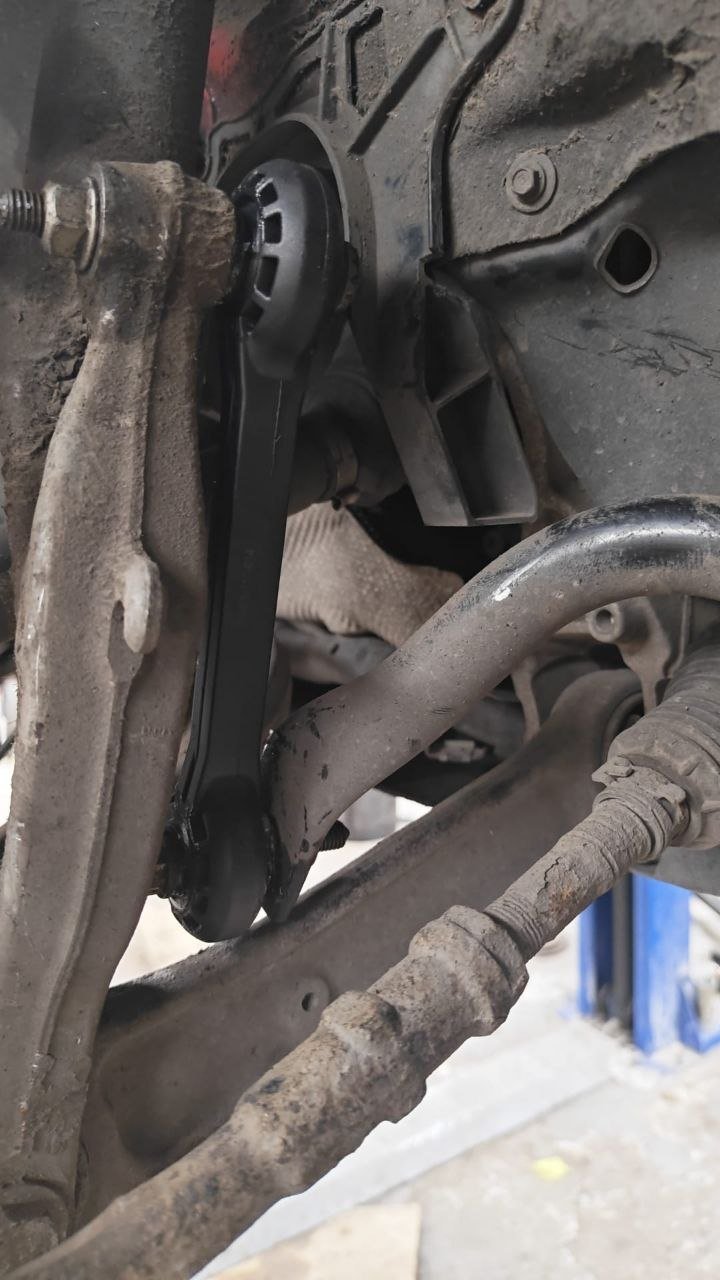
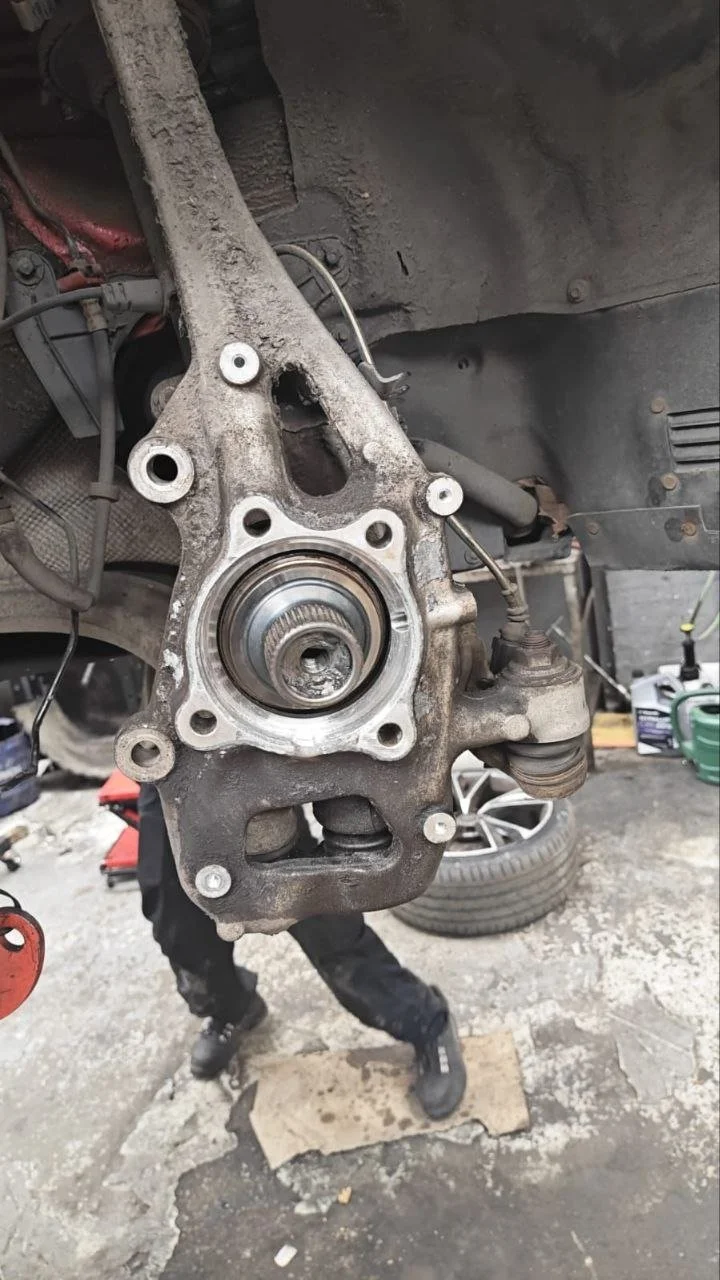
A 2017 Audi A4 came into us here at Platinum Vehicle Services with the owner reporting a low rumbling noise that had been getting gradually worse over several weeks. There was also a slight pulling sensation through the steering on faster roads. Those two symptoms together pointed us in a fairly clear direction before we had even put the car on the ramp, but we always do a proper inspection before confirming anything, and in this case what we found gave us a complete picture of what needed doing.
The Front Wheel Bearing Had Developed Significant Play and the Anti Roll Bar Drop Link Was Worn Through
Once the car was up on the ramp and the front wheel was off, we checked the hub assembly for play by gripping the wheel at the 12 o'clock and 6 o'clock positions and rocking it. There was noticeable movement, which tells you the bearing has lost its internal tolerance. A wheel bearing is designed to allow the wheel to spin freely while holding it firmly in place with no lateral or axial movement at all. When that movement starts to appear, the bearing is on its way out. On this A4, the play was enough that you could feel it clearly by hand, which means it had been deteriorating for some time. The rumbling noise the customer described is exactly what a failing bearing sounds like, caused by the rolling elements inside the bearing moving against worn or pitted raceways rather than running smoothly. While we had the front end stripped down we also inspected the anti roll bar drop links. The drop link is a short connecting rod that joins the anti roll bar to the suspension strut, and its job is to transfer load from one side of the car to the other when you go around a corner, keeping the body level and the tyres in proper contact with the road. On this car, the drop link bush was split and the joint itself had excessive free movement in it. That is what was contributing to the steering pull and the vague, slightly unsettled feel through the wheel.
Leaving Either of These Issues Any Longer Would Have Created a Real Safety Problem and a Much Larger Bill
A worn wheel bearing does not stay at the same level of wear. Once the internal play has developed to the point where it is detectable by hand, the rate at which it deteriorates tends to accelerate. The bearing generates heat as it runs in that worn state, and heat breaks down the grease inside the bearing and causes further damage to the raceways. In a worst case, a bearing that is left long enough can seize completely or shed its outer race. Either of those outcomes on a front wheel means you lose control of steering on that corner of the car. That is not a risk worth taking for the sake of getting the job done quickly. On the cost side, a bearing that is caught at this stage means you are replacing the bearing. A bearing that is left until it causes secondary damage can mean replacing the hub, the driveshaft, or in some cases components further up the suspension. The drop link is a less dramatic failure on its own, but a broken drop link means the anti roll bar is effectively disconnected on one side. The car will roll significantly more through corners, the tyre loading becomes uneven, and the handling becomes unpredictable at speed. Neither of these were something we were comfortable signing off without addressing.
New Wheel Bearing and Drop Link Fitted to the Front Axle and the Car Road Tested Before Being Returned
We pressed out the old bearing from the hub carrier using the correct press tooling, fitted a new bearing to the proper specification for a 2017 A4, and torqued everything back up to the manufacturer's settings. The drop link was replaced with a new unit, again to the correct specification, and the front end was reassembled. Once the car was back on the ground we took it out for a road test to confirm the rumble had gone and that the steering was tracking cleanly. It was. The car came back noticeably quieter and the steering felt settled and accurate again, which is exactly what it should feel like on an A4 of this age in otherwise good condition.
Suspension and bearing work is something we carry out regularly here at Platinum Vehicle Services in Walsall, across all makes and ages of vehicle. If you are driving something and you notice a low humming or rumbling noise that changes with your speed but not your engine revs, that is worth getting looked at. If the noise changes when you gently steer left or right at motorway speed, that points even more specifically to a wheel bearing. A knocking or clunking noise from the front end over bumps or when turning in a car park tends to suggest drop links, ball joints, or anti roll bar bushes. None of these things resolve themselves, and all of them affect how safely the car handles. If any of that sounds familiar, bring your car to us and we will put it on the ramp and tell you exactly what we are looking at. You can book in at platinumvehicleservices.co.uk.
Broken Coil Spring on a VW Polo. Walsall Suspension Repair
23 February
A customer brought their VW Polo into us recently with a familiar complaint: a knocking noise every time they hit a speed hump. It is the kind of thing you notice, ignore for a week, then cannot stop hearing. Once we got it on the ramp, the cause was obvious. A completely snapped coil spring.
How a Shock Absorber Destroys a Coil Spring
This is something we see more often than people realise. The coil spring rarely fails on its own. In this case, a worn shock absorber was the culprit. When a shock absorber starts to go, it stops doing its job of absorbing impact. That load gets transferred directly onto the spring, and over time the metal simply gives way.
As you can see in the video, the spring had snapped clean through and the broken section was sitting against the shock absorber body, which is exactly as dangerous as it sounds. Left unchecked, this leads to unpredictable handling, uneven tyre wear, and a suspension that could give way entirely at the wrong moment.
Why Suspension Problems Do Not Fix Themselves
A slightly bouncy ride or a knock over speed humps is easy to put off. But suspension issues compound quickly. One worn component puts stress on the next, and what starts as a relatively straightforward shock absorber job can turn into a full strut replacement plus associated damage.
Suspension Checks for VW Owners in Walsall
If you are driving a VW Polo, Golf, or Passat around Walsall, Willenhall, or anywhere across the West Midlands, your suspension is taking a beating on local roads every day. We specialise in German vehicles and know the tolerances these cars are built to.
If you are hearing knocking or clunking, or your car feels like it is leaning or bouncing more than usual, get it checked before it becomes a bigger problem. Early diagnosis is almost always cheaper than the alternative.
What are the warning signs of CV joint damage in my Golf and why does it happen?
If you're driving around Walsall and hearing strange clicking noises when turning corners, your Golf might be trying to tell you something important about its CV joints. As a family-run garage, we see CV joint problems regularly in Volkswagen Golfs, and the good news is that catching the warning signs early can save you from more expensive repairs down the road.
CV joints are crucial components that transfer power from your engine to your wheels while allowing them to move up and down with your suspension. When they start to wear out, your Golf will give you several clear warning signs before they fail completely.
Listen for clicking and knocking sounds
The most common sign of CV joint wear is a distinctive clicking or knocking noise when you're turning corners, especially from a standstill or at low speeds. You'll typically hear this when pulling out of your driveway or navigating car parks around Walsall.
The noise happens because the worn CV joint can't maintain smooth contact between its internal components during the turning motion. If you're hearing this sound, it's worth having it checked sooner rather than later, as continued driving can lead to complete joint failure.
Watch out for vibration and handling changes
A damaged CV joint often causes noticeable vibration through the steering wheel, particularly during acceleration. You might feel like your Golf is shuddering or struggling to transfer power smoothly to the wheels.
Some drivers also notice that their car feels less stable when accelerating around bends or roundabouts. This happens because the damaged joint can't maintain consistent power delivery, affecting how your Golf handles on the road.
Why CV joints fail in Volkswagen Golfs
CV joint damage typically occurs due to wear and tear over time, but certain conditions can accelerate the process. The protective rubber boots that surround the joints can crack or split, allowing dirt and moisture to contaminate the internal lubricating grease.
Golfs that frequently navigate tight car parks, speed bumps, or uneven road surfaces around the West Midlands tend to experience more CV joint stress. High mileage vehicles and those that haven't had regular servicing are also more susceptible to this type of wear.
When we diagnose CV joint issues at our garage, we always show our customers exactly what's happening with video footage of the problem area. This helps you understand whether it's an urgent safety concern or something that can be planned for your next service.
What Causes Wheel Vibration in My VW Golf When Using Aftermarket Wheels?
Installing new aftermarket wheels on your VW Golf can transform its appearance, but sometimes you might notice vibrations that weren't there with your original wheels. Over the years, my son and I have diagnosed countless vibration issues for Golf owners here in Walsall, and the causes are usually straightforward once you know what to look for.
Understanding why your Golf vibrates with aftermarket wheels can save you time, money, and the frustration of an uncomfortable drive. Let me walk you through the most common culprits we encounter in our workshop.
Incorrect Wheel Balance and Hub Centering
The most frequent cause of vibration with aftermarket wheels is improper balancing or hub centering issues. Your original VW wheels were designed specifically for your Golf's hub dimensions, typically 57.1mm center bore.
When aftermarket wheels have a larger center bore, they rely on hub-centric rings to center properly on your car's hub. Without these rings, or with incorrect ones, the wheel sits off-center even when the lug bolts are tight. This creates an imbalance that becomes noticeable at motorway speeds.
We always show our customers the difference between hub-centric and lug-centric mounting through video demonstrations. The vibration usually manifests as a rhythmic shaking through the steering wheel or seat, particularly between 50-70mph speeds.
Weight and Offset Differences from Original Equipment
Aftermarket wheels often have different weights and offsets compared to your Golf's factory wheels. VW engineers calculated the original wheel specifications to work harmoniously with your car's suspension geometry and weight distribution.
When the new wheels are significantly heavier or have different offset measurements, this changes how forces transfer through your suspension components. Your Golf's suspension bushings, bearings, and dampers experience different loads than they were designed for.
We've found that even wheels marketed as "direct fit" can sometimes have subtle specification differences that create vibrations. During our inspections, we measure the actual offset and weight differences to determine if they're within acceptable tolerances for your specific Golf model.
Installation and Torque Specification Issues
Proper installation goes beyond simply tightening the wheel bolts. VW Golfs require specific torque settings, typically around 120Nm, applied in the correct sequence to ensure even pressure distribution.
Aftermarket wheels sometimes require different bolt types or lengths compared to the original equipment. Using incorrect bolts can create uneven clamping forces, leading to microscopic wheel movement that translates into noticeable vibration.
In our workshop, we always verify that the wheel bolt engagement meets VW's safety requirements and document this for our customers. We've seen cases where wheels appeared secure but were actually undertorqued or using bolts that were too short for the wheel thickness, creating dangerous driving conditions alongside the vibration symptoms.
