Raq Hassan Raq Hassan

Hyundai Tucson Air Conditioning Regas in Walsall

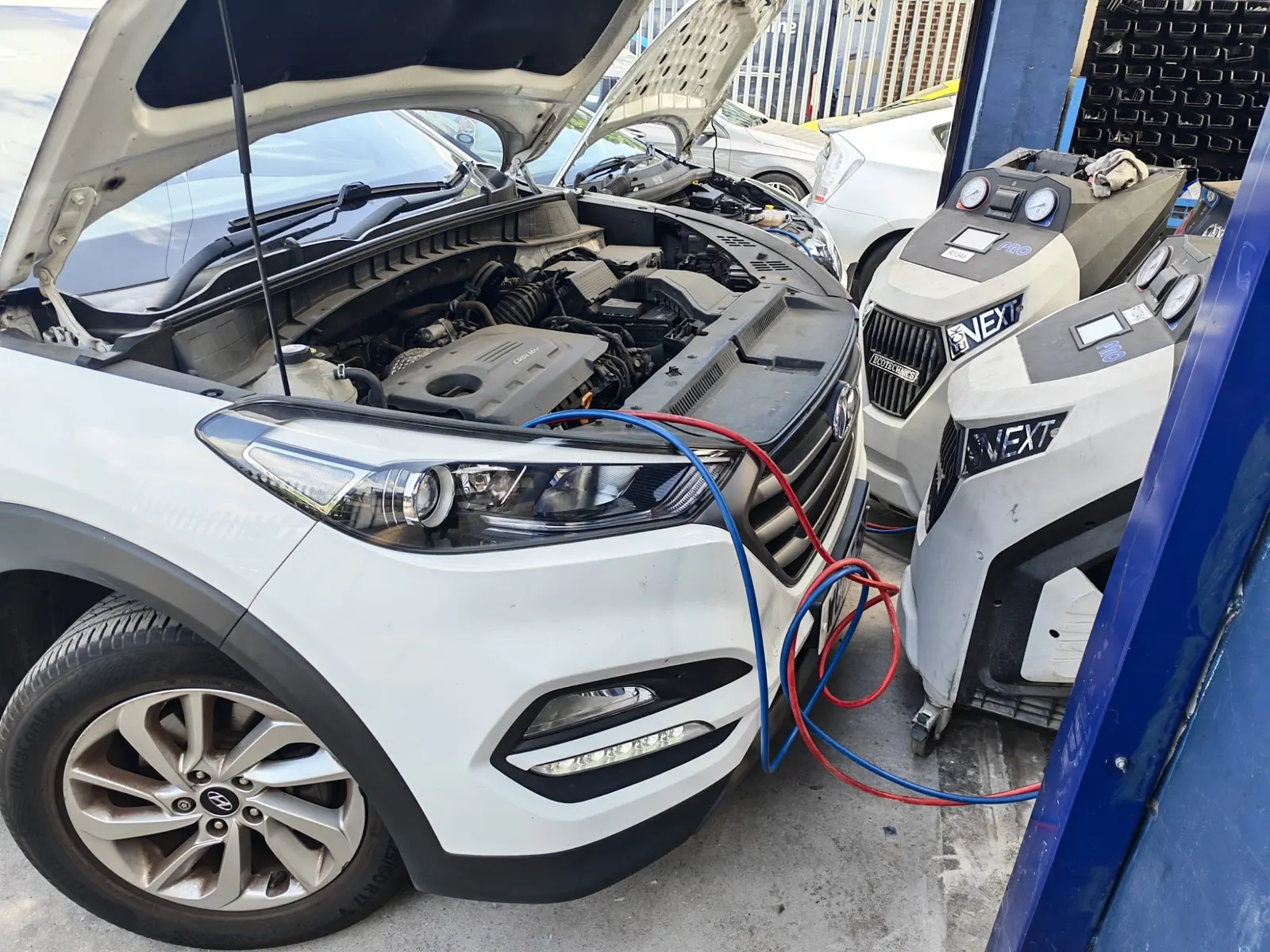
A Hyundai Tucson came into us recently with the air conditioning not performing as it should. The driver had noticed the system was blowing warm air rather than cold, which is one of the clearest signs that the refrigerant level has dropped too low to keep the system working properly. We put the car straight on the ramp and connected it to our diagnostic equipment to find out exactly what we were dealing with.

Hyundai Tucson Air Conditioning Regas in Walsall

The Refrigerant Level Was Too Low for the System to Cool the Cabin

Air conditioning works by cycling a refrigerant around a closed loop. The refrigerant absorbs heat from inside the cabin and releases it outside the car, which is what makes the air coming through the vents feel cold. When the refrigerant level drops, the system cannot absorb enough heat to make a difference, and you end up with warm or barely cool air instead.

We connected the Tucson to our NEXT ECOTECHNICS PRO recharge machine. This unit does several things in sequence. It first extracts whatever refrigerant remains in the system, then pulls the system into a vacuum to remove any moisture and check whether the circuit is holding pressure. A system that cannot hold a vacuum has a leak somewhere, and filling it at that point would be a waste because the refrigerant would simply escape again over the following days or weeks.

The System Held Its Vacuum, So We Refilled It to the Correct Specification

Fortunately, the vacuum test on this Tucson showed no significant leak. The system held steady, which told us the circuit itself was intact and the low refrigerant level was down to the natural slow loss that happens in any air conditioning system over time. Most cars lose a small amount of refrigerant each year just through the seals and joints, and after a few years that adds up enough to affect performance noticeably.

With the leak check clear, we refilled the system to the manufacturer's specified charge weight. Getting this right matters. Too little refrigerant and the system still underperforms. Too much and you risk damaging the compressor, which is the pump that drives the whole circuit. A compressor replacement runs to several hundred pounds, so getting the charge weight accurate protects the customer from an avoidable cost further down the line.

Once refilled, we ran the system and confirmed cold air was coming through the vents at the correct temperature. The car left with fully working air conditioning.

Signs Your Air Conditioning Needs Attention and How to Book In

Air conditioning regassing is a job we carry out regularly here in Walsall, and the symptoms are usually the same from one car to the next. If your air conditioning is blowing warm air, takes a long time to cool the cabin down, or the air feels less cold than it used to, a regas is often all it takes to bring things back to normal. Left too long, a system running on low refrigerant puts extra strain on the compressor, and a compressor failure is significantly more expensive to put right than a straightforward regas.

If your car's air conditioning is not performing as it should, get in touch with us or book your car in at platinumvehicleservices.co.uk and we will get it sorted for you.

Read More
Raq Hassan Raq Hassan

Why Is My Hyundai Heater Not Working When There's Coolant Everywhere?

If you're sitting in your Hyundai on a cold Walsall morning wondering why your heater's blowing cold air while you can see coolant pooling under your car, you're dealing with what we see quite often in our workshop. It might seem backwards that you've got coolant everywhere yet no heat coming through your vents, but there's actually a logical explanation for this frustrating combination.

When your cooling system develops a leak, it creates a domino effect that directly impacts your heater's ability to warm your car. Understanding what's happening can help you make informed decisions about repairs and avoid getting caught out by unexpected breakdowns.

Your Cooling System Has Lost Pressure

The most common reason your Hyundai heater stops working when coolant is leaking is that your cooling system has lost the pressure it needs to circulate properly. Your car's heater works by using hot coolant from the engine to warm air that gets blown into your cabin through the heater core.

When coolant leaks out through a damaged hose, faulty radiator, or blown head gasket, the system can't maintain the pressure needed to push that hot coolant through the heater core effectively. Even if there's still some coolant left in the system, without proper pressure and circulation, your heater core isn't getting the hot coolant it needs to generate warm air.

This is why you might notice your heater working intermittently or only when you're revving the engine. The engine's water pump is trying to circulate what coolant remains, but it's fighting against air pockets and reduced fluid levels that make efficient heat transfer nearly impossible.

Air Pockets Are Blocking Heat Transfer

When your Hyundai's cooling system loses coolant, air gets sucked into the system to fill the void. These air pockets, known as airlocks, are particularly problematic for your heater because the heater core is often one of the highest points in the cooling system.

Air doesn't transfer heat nearly as well as liquid coolant does. So even if your engine is running at normal temperature, those air pockets sitting in your heater core mean there's no hot liquid available to warm the air being blown into your car.

We often see customers who've tried topping up their coolant themselves, only to find their heater still doesn't work properly. This happens because simply adding coolant doesn't automatically remove those air pockets. The system needs to be properly bled to ensure coolant can flow freely through all components, including your heater core.

Multiple Components Could Be Affected

When we see coolant leaks in Hyundais, we always check beyond just the obvious leak source because cooling system problems rarely happen in isolation. Your heater matrix, water pump, thermostat, and various hoses all work together as one system.

Sometimes what appears to be a simple coolant leak is actually a symptom of a more serious problem like a failing head gasket or cracked cylinder head. These issues can cause coolant to leak internally into your engine's combustion chambers, leading to coolant loss without always showing obvious external leaks.

The key is getting a proper diagnosis that identifies not just where the coolant is going, but why the system failed in the first place. This is where our video diagnostic approach really helps our customers understand what's happening with their vehicle and make informed decisions about which repairs are most urgent for their safety and budget.

Watch our video explanation here: https://www.youtube.com/shorts/4PXlQ6jyas8

Read More