

VW Golf Mechanical Issues Diagnosed and Repaired in Walsall
We had a VW Golf come into us recently at Platinum Vehicle Services. The owner had been putting up with a few things for a while, a warning light sitting on the dashboard, a low rumbling noise that got louder at certain speeds, and a general feeling that the car was not quite right under braking. None of those things on their own would stop you driving, but together they were telling a clear story. We put the car on the ramp and started working through it properly.
A Worn Wheel Bearing Was Causing the Rumble and Needed Replacing Before It Failed Completely
The noise the driver had noticed was coming from the nearside front wheel bearing. A wheel bearing is a set of steel balls or rollers packed inside a ring of metal that allows the wheel to spin freely around the axle. When it wears out, the clearance inside it increases and you get that low, droning rumble that tends to change pitch as you steer left or right. We measured the play in the hub and it was outside the acceptable tolerance, which confirmed the bearing had worn beyond the point where it could be left. On a Golf of this age and mileage, that is not unusual. The concern with leaving a bearing in that condition is not just the noise. As the wear increases, the wheel can develop lateral movement. At motorway speeds that movement becomes unpredictable, and in a hard braking situation the wheel is not as stable as it needs to be. We pressed out the old bearing and fitted a new one, then checked the hub for any scoring that could affect how the new bearing seats.
The Engine Management Warning Light Was Traced to a Fault With the Oxygen Sensor
We plugged our diagnostic reader into the car's OBD port, which is a standardised socket usually found beneath the dashboard. The reader communicates with the car's engine management system and pulls out any stored fault codes. The code that came back pointed to the downstream oxygen sensor on the exhaust. An oxygen sensor measures the level of unburnt fuel leaving the engine and feeds that information back to the engine management unit so it can adjust the fuel mixture. When the sensor gives inaccurate readings, the engine runs on the wrong mixture and fuel economy drops. On this Golf the live data from the sensor was erratic, dropping in and out rather than giving a steady signal. That is a sign the sensor itself has failed rather than there being a wiring fault. We replaced the sensor and cleared the fault code, then ran the engine through a full drive cycle to confirm the light did not return. It did not.
Leaving Either of These Faults Would Have Cost More and Created Real Risk
If the bearing had been left another few thousand miles, the wear would have progressed to the point where the hub itself could have been damaged. At that stage you are not just paying for a bearing, you are paying for a hub assembly as well, and the labour time increases significantly. The oxygen sensor fault is less dramatic in the short term, but running on a poor fuel mixture over time causes the catalytic converter, which is the emissions cleaning unit in the exhaust, to work harder than it should. Catalytic converters are expensive components, often between 300 and 600 pounds or more depending on the vehicle, and premature failure caused by an ignored sensor fault is an avoidable cost.
If Your Golf or Any Other Vehicle Is Showing Signs Like These, Book It In With Us in Walsall
This kind of job is exactly what we do day to day here in Walsall. Whether it is a warning light you have been ignoring, a noise that comes and goes, or a feeling through the steering wheel or pedal that something is not right, those are all worth getting looked at before they develop into something more serious and more expensive. We work on Volkswagen, Mercedes, BMW, Audi, Ford and a wide range of other vehicles, covering everything from routine servicing and MOT testing through to suspension, brakes, engine diagnostics and complex mechanical repairs. If you notice a rumbling or droning noise that changes when you steer, a dashboard warning light, a vibration through the wheel, or a pulling sensation when you brake, do not leave it. The sooner we look at it, the simpler and cheaper it usually is to sort. You can leave us a message any time, 24 hours a day, 7 days a week, on 07970901354 and someone from the team will come back to you as soon as possible. You can also find out more about what we offer at platinumvehicleservices.co.uk.
Mazda Misfire Diagnosed and Repaired at Our Walsall Garage
A Mazda came into us recently with a misfire that the owner had been noticing for a little while. The engine was running roughly, particularly at lower revs, and the car felt hesitant when pulling away. These are the kinds of symptoms that can have several causes, so the first job was to pull the spark plugs and have a proper look at what was going on.
Oil Had Got Into the Spark Plug Wells and Soaked the Plugs Through
When our mechanic removed the spark plugs, it was immediately obvious what the problem was. Oil had been leaking down into the spark plug wells, which are the tubes that the plugs sit inside in the engine head. The plugs themselves were wet with oil. A spark plug works by creating a small, precise electrical spark at exactly the right moment to ignite the fuel and air mixture in the cylinder. When a plug is saturated in oil, that spark becomes weak and unreliable, and in some cases the plug fails to fire at all. The result is a misfire, where one or more cylinders are not burning fuel properly, and the engine runs rough as a consequence.
The oil was getting in through a failing valve cover gasket. This is a rubber seal that sits between the valve cover, the removable top section of the engine, and the engine head below it. Over time these gaskets harden and crack, and once they go, oil finds its way into places it should never be.
Leaving Oil in the Plug Wells Leads to a More Expensive Repair
A soaked spark plug is bad enough on its own, but the bigger concern is what happens if this is left. Each spark plug sits alongside an ignition coil, which is the component that generates the high voltage needed to fire the plug. Oil contamination attacks the coil's insulation over time, and once a coil fails you are replacing electrical components on top of everything else. A new ignition coil for this engine costs significantly more than a set of spark plugs and a gasket combined, so catching this early made a real difference to the overall bill. There is also a running efficiency angle here. An engine misfiring on one or more cylinders is burning fuel less efficiently, which means worse economy at the pump for every mile driven while the fault is left.
New Plugs Fitted and the Valve Cover Gasket Replaced to Stop the Leak at the Source
We replaced all the spark plugs with new ones to the correct specification for this engine and fitted a new valve cover gasket to seal the leak properly. The plug wells were cleaned out before reassembly so no residual oil was left sitting around the new components. Once everything was back together we ran the engine and road tested the car. The misfire had gone, the engine was pulling cleanly through the rev range and the hesitation on pull away had cleared completely.
If you are driving a Mazda or any other car and you notice a rough idle, a shudder at low revs, reduced power or a feeling that the engine is not quite running as it should, these are all signs worth getting checked before the problem develops further. An oil leak that seems minor can cause expensive knock on damage if it is reaching components it should not be near.
We carry out engine diagnostics, leak repairs and servicing at our garage in Walsall, and we are happy to take a look if something does not feel right. Book your car in with us at platinumvehicleservices.co.uk and we will give you a straight answer on what needs doing.
Ford Full Service and Suspension Knock Diagnosed in Walsall
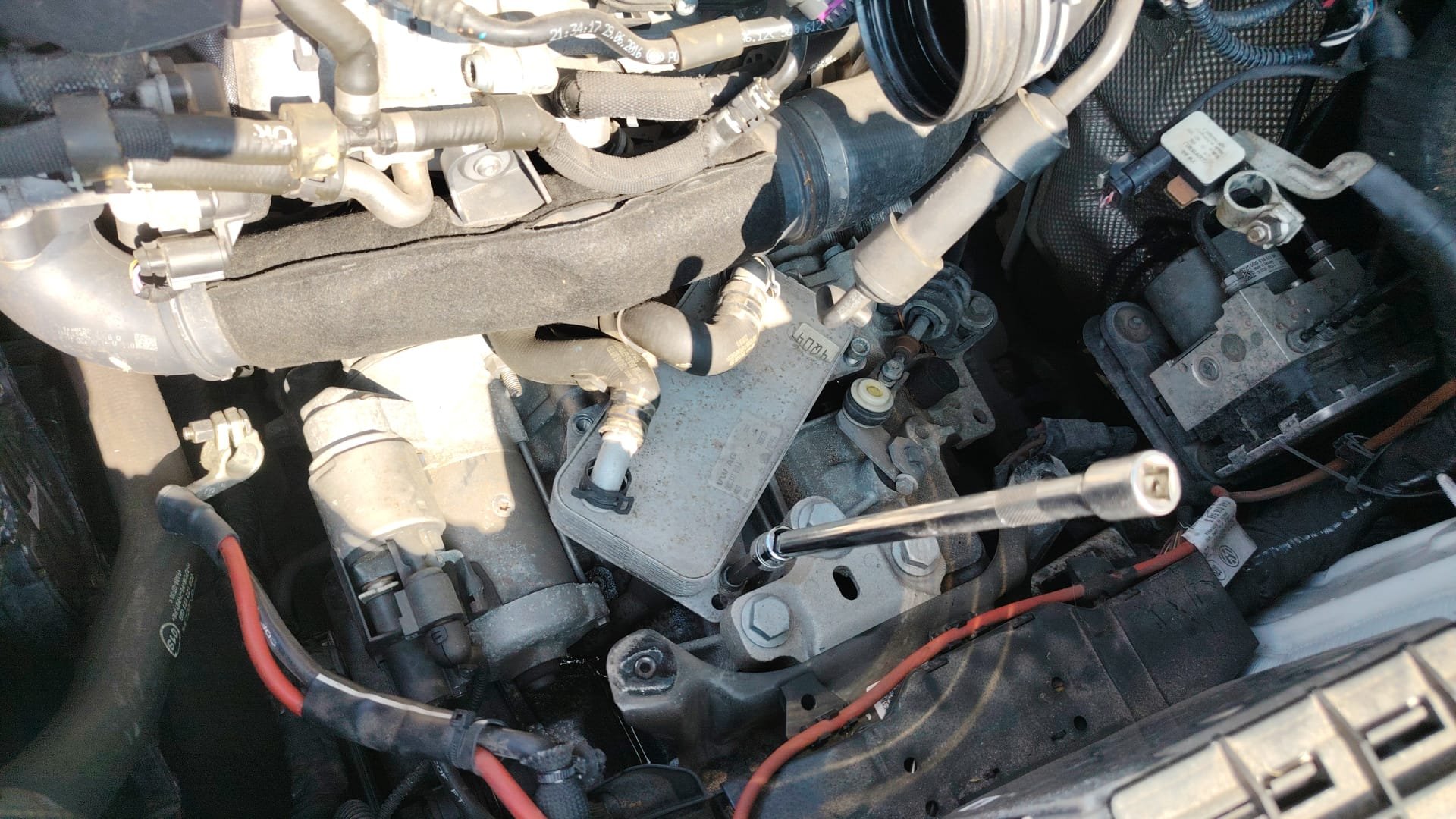
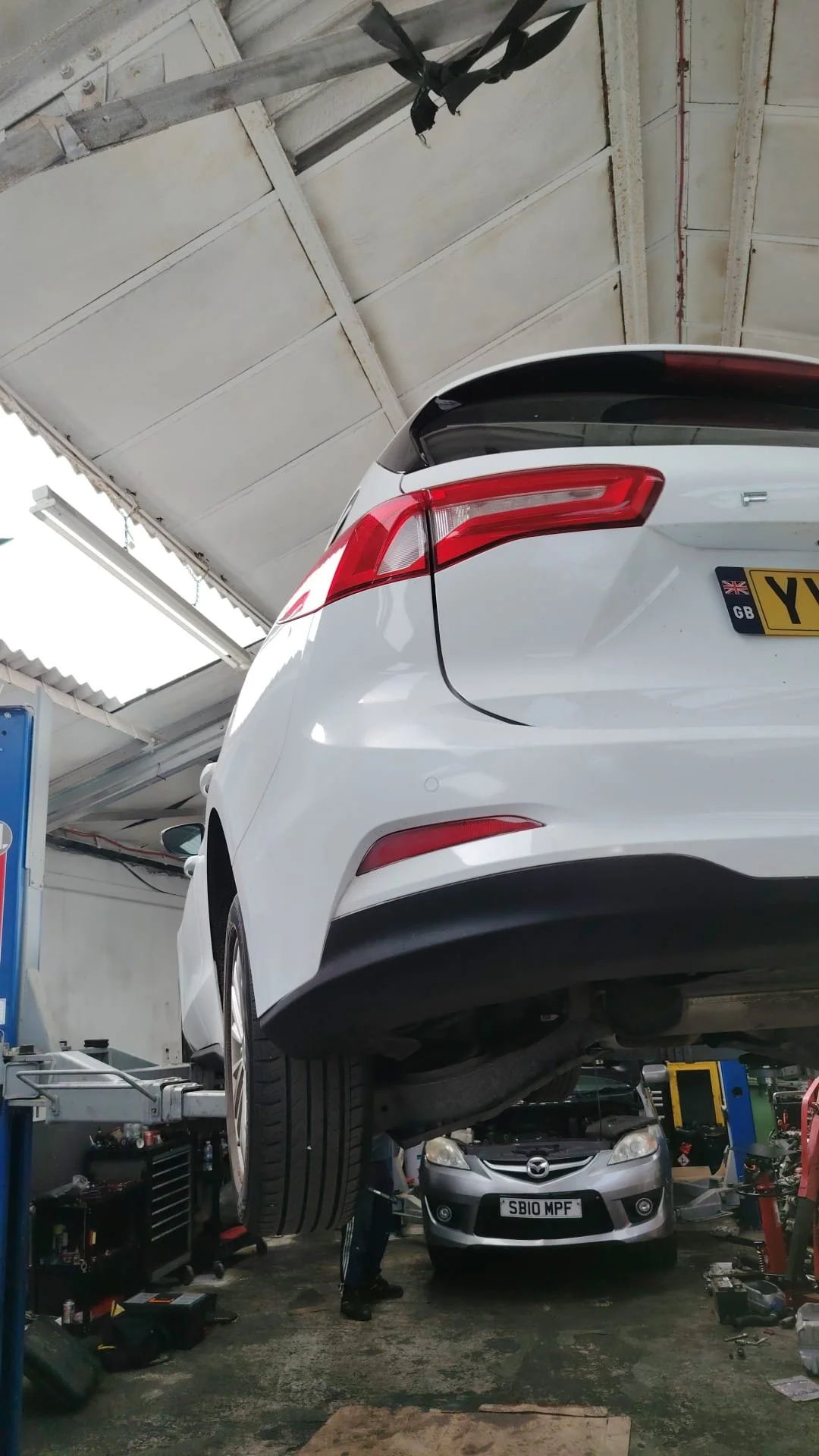
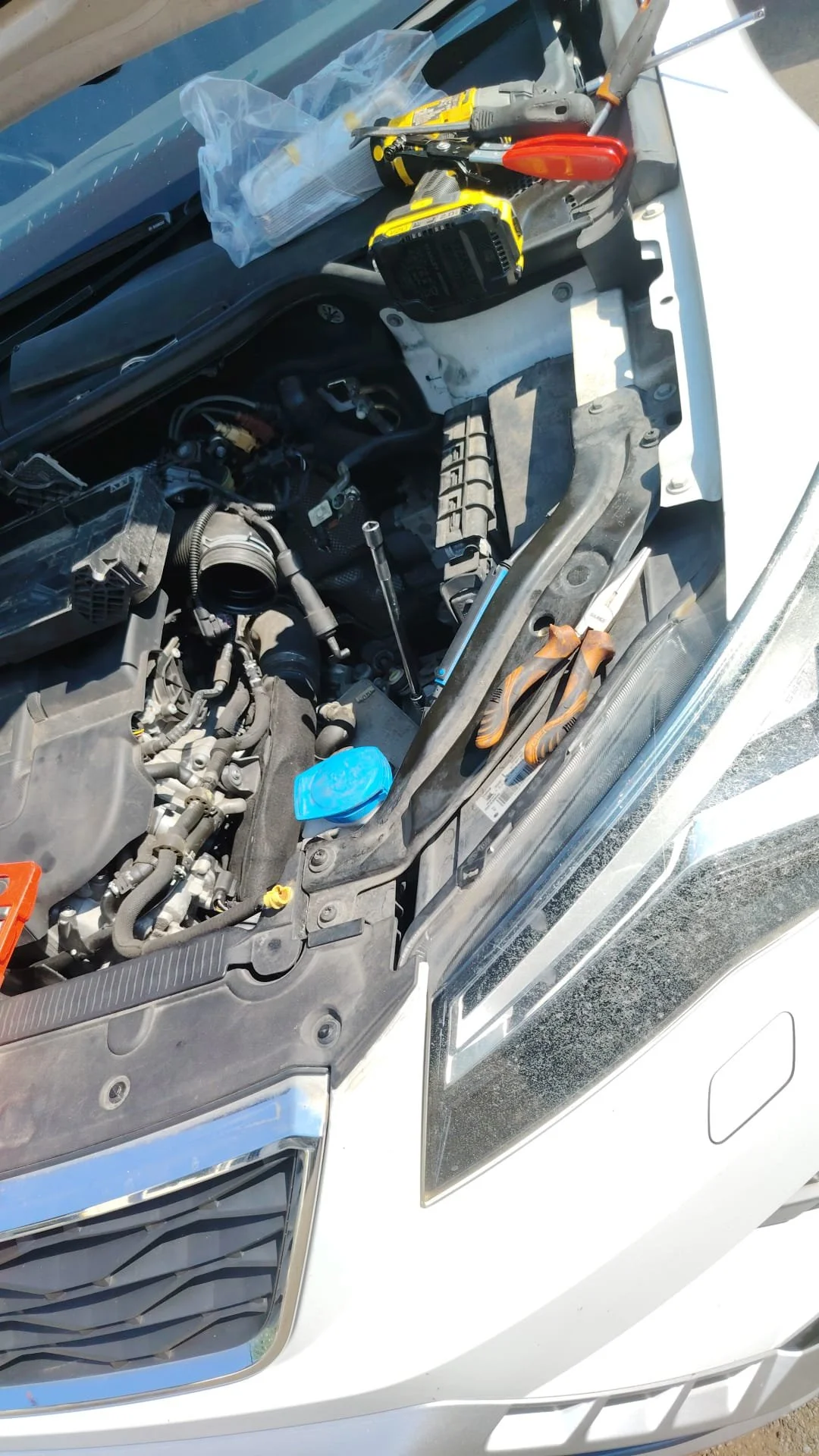
This Ford came into us at Platinum Vehicle Services in Walsall for a full service alongside something the owner had been putting up with for a while, a knocking noise coming from the suspension. They had noticed it most when going over speed bumps and pulling out of junctions, which told us straight away the noise was load dependent. That is a useful clue. Random noises that appear and disappear with no pattern are harder to pin down, but a knock that shows up under suspension movement narrows the search considerably.
The Car Went Straight on the Ramp to Find the Source of the Knock
You cannot properly diagnose a suspension knock from a test drive alone. A road test tells you roughly where in the car the noise is coming from and under what conditions, but to find the actual cause you need the wheels off the ground so the components can be moved by hand. We put the Ford up on the ramp and worked through the front suspension and steering components methodically, checking each joint and bush for play. Play means unwanted movement, the kind that should not be there when a joint is in good condition. When we got to the front lower wishbone, the ball joint at the end of it had visible movement when pushed and pulled. A ball joint connects the wheel hub to the suspension arm and allows the wheel to pivot when you steer while still moving up and down with the road surface. When the rubber boot splits or the joint wears internally, it develops slack, and that slack is what causes the knock every time the suspension compresses or extends.
A Worn Ball Joint Is a Braking and Steering Risk, Not Just a Noise
Leaving a worn ball joint is not simply a matter of tolerating an annoying knock. As the joint continues to wear, the amount of play increases. At a certain point the joint can no longer locate the wheel accurately, which affects both steering precision and braking. In a worst case scenario a severely deteriorated ball joint can separate, which means the wheel loses its connection to the suspension entirely. That is a situation that causes an immediate loss of control. We always tell customers this because the noise on its own sounds like a minor irritation, but the component itself is load bearing and safety critical. Catching it at the stage this Ford was at, with measurable play but still intact, is the right time to deal with it. Leaving it until the knock gets louder means the joint has worn further and may by that stage have started to affect the wishbone bush as well, adding to the repair cost.
New Ball Joint Fitted and the Full Service Completed Alongside
We replaced the worn front lower ball joint and retorqued everything to the manufacturer specification before lowering the car. With the suspension knock resolved we completed the full service, which covered the engine oil and filter, air filter, pollen filter and a check of all fluid levels, brake condition, tyre pressures and tread depths. Doing the service and the suspension work together in one visit meant the car was with us for a single session rather than two separate trips, which saves the owner time.
If you have been hearing a knock or clunk from your car, particularly over bumps, on corners or when braking, it is worth getting it checked before it develops further. Suspension wear is progressive and the longer a worn component is left, the more stress it places on the parts around it. We carry out suspension inspections, servicing and mechanical repairs at our workshop in Walsall, and we will tell you exactly what we find before any work is carried out. Book your car in with us at platinumvehicleservices.co.uk.
Seat Oil Cooler Replacement in Walsall
A Seat came into us with a concern that had been building for a while. The owner had noticed something unusual in the coolant reservoir, a milky, discoloured fluid rather than the clear or bright coloured coolant you would normally expect. That appearance is a reliable sign that engine oil has found its way into the coolant system. The two fluids should never mix, and when they do, it points to a specific failure somewhere in the system. On this car, the cause turned out to be the oil cooler.
The Oil Cooler Was Allowing the Two Fluids to Cross Contaminate
The oil cooler is a component that sits between the engine oil circuit and the coolant circuit. Its job is to use the coolant to help regulate the temperature of the engine oil, keeping both fluids at the right operating temperature. Crucially, it keeps them on opposite sides of an internal barrier so they never actually touch. When that barrier breaks down, whether through age, heat cycling or a failure in the seals, oil can pass into the coolant and coolant can pass into the oil.
On this Seat we removed the oil cooler and the failure was clear. The internal sealing had given way, and oil had been migrating into the coolant circuit. We also checked the coolant itself, which had taken on that characteristic brown, sludgy appearance that confirms contamination has been going on for some time.
Leaving Contaminated Coolant in the System Causes Progressive Engine Damage
This is not a fault you can leave and monitor. Once oil gets into the coolant, the coolant loses its ability to transfer heat properly. The engine starts running hotter than it should, and heat stress on internal components increases. At the same time, if coolant has been crossing into the oil, the oil becomes diluted and loses its lubricating properties. Bearings and other moving parts that depend on a consistent oil film start to wear faster. What begins as a failed oil cooler, which is a manageable and relatively contained repair, can become a damaged engine if the contamination is left to continue.
We Fitted a New Oil Cooler and Flushed the System Through
We replaced the oil cooler with a new unit, restoring the separation between the two circuits. Once the new cooler was fitted, we flushed the coolant system to clear out the contaminated fluid and refilled it with fresh coolant to the correct specification and level. We also checked the oil for signs of coolant contamination and confirmed the system was running correctly before the car left us.
Signs to Watch for on Your Own Car and How to Book In
If you check your coolant reservoir and the fluid looks brown, milky or has a sludgy texture, that is worth investigating immediately. A sweet smell from the engine bay or a consistently low coolant level with no visible leak outside the car are also signs that something is wrong internally. The earlier this kind of fault is caught, the less it costs to put right.
We carry out this type of engine diagnostics and cooling system work regularly here at our Walsall garage. If you have noticed anything unusual with your coolant or your engine temperature, get in touch with us and we will take a look. You can book in at platinumvehicleservices.co.uk.
Nissan Juke DPF Regeneration in Walsall
We had a silver Nissan Juke come into the workshop recently with the DPF warning light showing on the dash. The owner told us the car had been feeling sluggish and the light had been on for a few days. They were not sure what it meant, but they knew something was not right. We put it on our Snap-on Modis Edge diagnostic machine and confirmed what we suspected straight away. The diesel particulate filter was heavily loaded with soot and needed a forced regeneration carried out here in the workshop.
The DPF Soot Content Was High Enough to Prevent the Car from Regenerating on Its Own
The diesel particulate filter on this Juke works by trapping soot particles from the exhaust gases before they leave the tailpipe. Under normal driving conditions, the car will attempt to burn that soot off by itself during what is called a passive regeneration. This happens automatically when the exhaust temperature gets high enough, usually on a longer motorway run. The problem with a car that is mostly used for short trips around town is that the exhaust never gets hot enough for long enough to complete that process. Soot builds up gradually, and eventually the filter reaches a point where it cannot clean itself. On our diagnostic screen, the Modis Edge was showing us the real-time soot content inside the filter. When we connected it, the reading was high enough that the car's own system had already given up trying to regenerate. At that point, the only way to resolve it is a forced regeneration carried out by a technician using professional equipment.
Leaving a Blocked DPF Any Longer Risks Permanent Filter Damage and a Repair Bill Running into the Hundreds
This is worth understanding properly, because a lot of drivers see the DPF light, notice the car is still driving, and decide to leave it. That is when the situation gets expensive. A DPF that is sat at a high soot loading and not being addressed will eventually reach what is known as ash accumulation, where the blocked material can no longer be burned off at all. At that stage, a forced regeneration will not fix it. The filter itself needs replacing, and on a Nissan Juke that can cost anywhere from around 600 to over 1,000 pounds depending on whether you are looking at a genuine part or a quality aftermarket unit, plus the labour on top. There is also the risk of the engine going into a protective limp mode, where it cuts power to prevent further damage. When that happens, the car becomes unreliable to drive and potentially unsafe if it happens at the wrong moment. The earlier a blocked DPF is dealt with, the more options you have and the less it costs.
A Full Forced Regeneration Carried Out Using the Snap-on Modis Edge, with the Process Monitored Throughout Until Soot Content Returned to a Safe Level
To carry out the regeneration, we connected the Snap-on Modis Edge to the Juke's diagnostic port and initiated a forced regeneration cycle through the software. The machine controls the process and monitors the key parameters throughout, including the exhaust temperature before and after the filter, and the DPF soot content in real time. During regeneration the engine revs itself up and the exhaust temperature climbs significantly, often to over 600 degrees Celsius at the filter itself, because that is the temperature needed to burn the accumulated soot. We keep the car running on the ramp for the full duration, which in this case was around thirty minutes. The technician checked on the readings throughout and confirmed the soot content was dropping steadily. By the end of the cycle, the filter was reading clean and the warning light was off. The car left the workshop running smoothly with no warning lights showing and no sluggishness in the throttle response.
If Your Diesel Car Is Showing Warning Lights or Feels Heavy to Drive, Do Not Leave It
DPF problems are one of the most common issues we deal with on modern diesel vehicles, particularly those that spend most of their time on shorter journeys. If you drive a diesel and you are seeing a DPF warning light, a loss of power, increased fuel consumption, or white or grey smoke from the exhaust, those are all signs the filter may be loading up with soot. The earlier you bring it in, the more likely it is that a forced regeneration will resolve the problem completely without any need for parts. We carry out DPF diagnostics and regenerations regularly here in Walsall, and we use the same Snap-on Modis Edge equipment you can see in the video to monitor the process properly from start to finish. If you are unsure whether your diesel car is dealing with a DPF issue, bring it in and we will have a look. You can book in at platinumvehicleservices.co.uk.
2013 Vauxhall Corsa Misfire Diagnosis in Walsall: Why We Stopped Before Replacing the Spark Plugs
This 2013 Vauxhall Corsa came into us at Platinum Vehicle Services with a misfire. The customer had been told, or at least suspected, that spark plugs were the likely cause. That is a fair assumption in most cases. A misfire on a Corsa of this age can absolutely come down to worn plugs, and a set of new ones usually sorts it. But before we start replacing parts, we always take the time to look at what is actually in front of us. In this case, what we found changed the direction of the job entirely.
Water Was Pooling Around One of the Spark Plugs and the Coolant Reservoir Was Full of Oil
When we pulled the spark plug cover and got eyes on the plugs, one cylinder had water sitting around it. That is not normal. Water in that area suggests it is getting in from somewhere it should not be, and on a petrol engine like this, the most common route is through a failed head gasket. We did not stop there. We went to check the coolant reservoir, and the customer mentioned something that immediately made us take this more seriously: they said the coolant had been clean just a week before.
When we removed the yellow reservoir cap, the inside of it was coated in a thick, dark, oil-contaminated sludge. The fluid in the reservoir was visibly contaminated too. Oil and coolant are two systems that are kept entirely separate inside the engine. They have their own channels, their own seals, and their own jobs to do. When you see oil in the coolant, it means those two systems are no longer separated. The head gasket sits between the engine block and the cylinder head, and it is what keeps oil, coolant, and combustion gases in their correct channels. When that gasket fails, the seals break down and the fluids mix. That is what we were looking at here.
Fitting New Spark Plugs at This Point Would Have Cost the Customer Money Without Fixing Anything
If we had gone ahead and fitted a new set of spark plugs without investigating further, the misfire would not have gone away. The water getting into that cylinder is what is causing the engine to run rough. New plugs would have been fouled again quickly, or the misfire would have continued regardless. The customer would have paid for parts and labour that did not address the actual problem, and then come back to us a short time later in a worse situation.
A blown head gasket left unaddressed does not stay at the same level. Once oil and coolant are mixing, the coolant loses its ability to keep the engine at the right temperature. The oil also becomes contaminated and loses its viscosity, which means it does not lubricate the engine components properly. Over time, this leads to overheating, and overheating on a petrol engine can warp the cylinder head. A warped head means the head gasket repair also requires the head to be skimmed or replaced, which adds significant cost on top of the gasket work itself. If the engine is run long enough in this condition, you can reach a point where the engine block itself is damaged, and at that stage the repair bill can exceed the value of the car.
We advised the customer on all of this before any further work was carried out. The decision on how to proceed was theirs to make with a full picture of what was going on.
The Plugs Were Left in Place and the Customer Was Given an Accurate Diagnosis to Work From
Rather than fitting plugs the car did not need at that point, we documented what we found, explained the head gasket situation clearly, and gave the customer the information they needed to decide on the next step. The correct repair here is a head gasket replacement, which involves removing the cylinder head, inspecting it for warping, replacing the gasket, and refitting everything with new head bolts and correct torque settings. The coolant system would also need to be fully flushed to remove the oil contamination before clean coolant goes back in.
This is a significant job, but it is a manageable one when it is caught at the right time. The customer came to us thinking they needed spark plugs. What they actually needed was an accurate diagnosis, and that is what we gave them.
If you drive a Vauxhall Corsa, or any petrol car of a similar age, there are a few things worth keeping an eye on. Check your coolant reservoir regularly. It should be clear or slightly tinted depending on the coolant type, never brown or sludgy. If you see a creamy or oily residue on the underside of your oil filler cap, that is another indicator that oil and coolant may be mixing. A persistent misfire that does not respond to basic maintenance, a sweet smell from the engine bay, or your temperature gauge running higher than usual are all signs worth getting looked at before they develop further.
We carry out engine diagnostics and fault investigations at our garage in Walsall, and we do not quote for work until we know what the car actually needs. If your car is misfiring, running hot, or you have noticed anything unusual with your coolant or oil, get it booked in with us before the problem has a chance to become a more expensive one. You can reach us and book an appointment at platinumvehicleservices.co.uk.
